
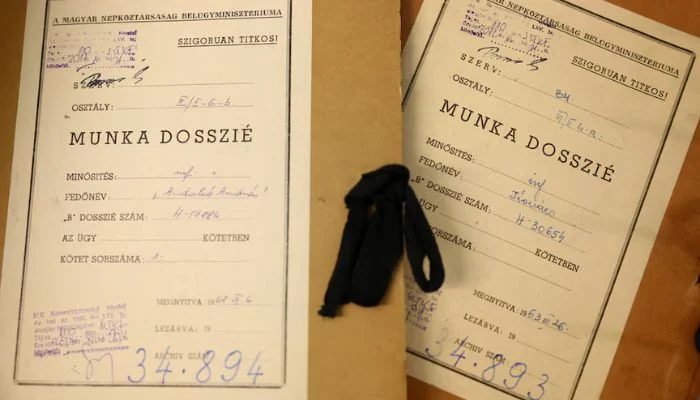
Hungary has made thousands of communist-era secret police records publicly accessible for the first time on Wednesday, November 4, allowing citizens to search for people suspected of spying on their friends, neighbours and relatives during decades of authoritarian rule. Prime Minister Peter Magyar announced that around 60,000 names had been released through an online database, fulfilling a promise that successive governments had failed to deliver since the collapse of communism in 1989.
The records reveal details of a surveillance network used by the country's communist authorities to monitor political opponents, journalists, artists and ordinary citizens. Informants were recruited through various means, including threats, blackmail and financial rewards.
Some were tasked with reporting on their own families and colleagues. Magyar, who defeated former prime minister Viktor Orban in April's parliamentary elections, warned that the disclosures could reveal painful details about people's relatives, including those who have since died.
He urged Hungarians to approach the information with compassion rather than rush to judge those named in the documents. The release coincides with the 70th anniversary of the Soviet crackdown on Hungary's 1956 anti-communist uprising.
However, the archives remain incomplete. Officials estimate that around 150,000 people worked as informants during communist rule, but records concerning many of them were destroyed during the 1956 uprising and shortly before the regime collapsed.
Archivists have also cautioned that appearing in the database does not necessarily mean someone actively worked as an informer. More documents are scheduled for release on February 25, 2027.
Meanwhile, Orban said on Tuesday that communist intelligence officials had attempted to recruit him during his military service, but claimed he refused and was subsequently placed under surveillance.