
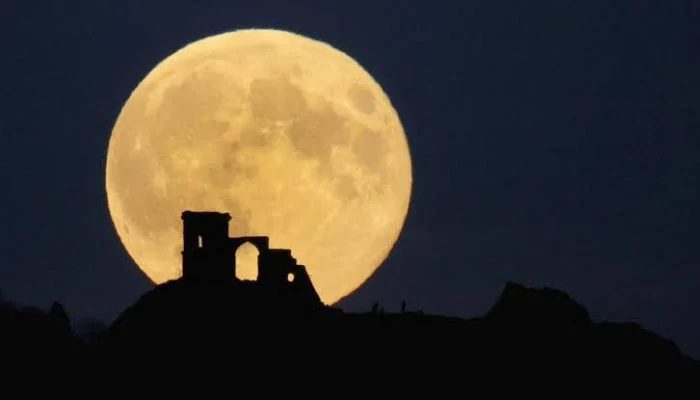
October's full Hunter's Moon will reach peak illumination at 12:11 a.m. EDT on Monday, October 26, 2026, but skywatchers won't need to stay up past midnight to enjoy it. The moon will appear nearly full throughout the weekend.
The Hunter's Moon is the second full moon of fall in the Northern Hemisphere, following September's Harvest Moon, which occurred September 26. It is the 11th of 13 full moons scheduled for the year.
In 2026, there is an extra full moon because the lunar year runs about 11 days shorter than the solar year. The best views come at moonrise, when the moon sits low on the eastern horizon at dusk.
In New York City, moonrise on Monday is at 5:59 p.m. In Los Angeles, moonrise is at 6:05 p.m. Those with unobstructed eastern views can watch the nearly full moon climb into the fading daylight. The moon will also appear nearly full Saturday, Sunday, and Tuesday evenings.
No telescope is needed for this observation. For the most dramatic view, look toward an open horizon where trees or buildings provide a picturesque backdrop.
The name "Hunter's Moon" dates back to a centuries-old tradition. After farmers finished harvesting, bare fields made it easier to spot deer and foxes fattened for winter, and bright moonlight allowed hunting to continue after sunset.
Other traditional names for this lunar event include the Travel Moon, Dying Grass Moon, and Sanguine Moon. These names reflect the changing seasons and the transition toward the colder months of the year.
The next full moon will be the Beaver Moon on November 24. This upcoming event will be a supermoon and the first of two such occurrences closing out the year 2026.
As the lunar cycle progresses, enthusiasts are encouraged to find a dark location away from city lights to fully appreciate the brilliance of the Hunter's Moon as it graces the night sky. Whether you are an amateur astronomer or simply a fan of nature's beauty, this celestial event offers a perfect opportunity to witness the mechanics of our solar system in action.