
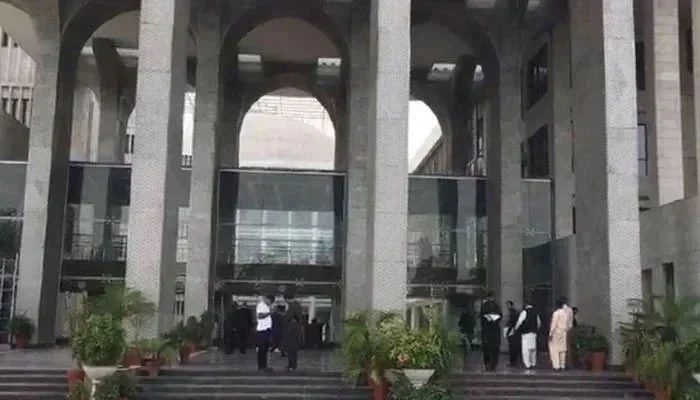
The Islamabad High Court (IHC) has ordered enforcement of relevant laws to prevent online harassment, blackmailing and the unauthorised publicity of private material, redressing the complaints relating to misuse of electronic and digital media. The court directed the federal government, the Pakistan Telecommunication Authority (PTA), the Pakistan Electronic Media Regulatory Authority (Pemra) and the National Cyber Crime Investigation Agency (NCCIA) to submit comprehensive reports on the implementation of laws aimed at preventing online harassment, blackmail and unauthorised dissemination of private content.
Justice Arbab Muhammad Tahir, in an interim order in a petition filed by Dr Raana Ahsan, also directed the federal government to convene a meeting of the relevant institutions to identify gaps in coordination, clarify their statutory responsibilities and devise a coordinated mechanism for effective enforcement of the applicable laws.
The court observed that the petition raised substantial questions of public importance concerning online safety, misuse of electronic, digital and broadcast media, the effectiveness of existing regulatory mechanisms and the protection of citizens' fundamental rights. The order referred to statistics submitted by the PTA showing varying compliance rates with requests to block unlawful online content.
According to the report, the compliance rate was 59.01 percent in matters concerning Pakistan's security and defence, 79.51 percent in terrorism-related cases, 76.28 percent in cases of contempt of court, 76.54 percent in matters involving content against the glory of Islam, 40.38 percent in cases of defamation or impersonation, 98.91 percent in matters relating to decency and morality, and 67.43 percent in cases involving sectarian or hate speech.
The platform-wise figures showed a compliance rate of 48.42 percent for Twitter, 78.57 percent for Facebook, 79.52 percent for Instagram, and 68 percent for TikTok. The court observed that the figures required a considered explanation regarding the effectiveness of existing mechanisms and the measures available to ensure compliance with lawful directions.
According to the PTA report, requests were made to social media companies following the notification of the relevant rules in October 2021 to fulfil registration requirements and appoint local compliance and grievance officers. However, no affirmative response had been received to date.
The PTA also stated that the limited scope of its existing powers had, in practice, restricted its role to approaching social media operators for content removal or taking technical measures against their services. Requests were frequently declined by the operators on the basis of their respective community guidelines, the report stated.
The court observed that the Prevention of Electronic Crimes Act (PECA), 2016, provides for the establishment of the Social Media Protection and Regulatory Authority (SMRA), with functions including online safety, protection of users' rights, regulation and enlistment of social media platforms, and removal or blocking of unlawful content.
The law also provides for binding directions to social media platforms and mechanisms involving the Social Media Protection Tribunal and the Social Media Complaint Council. In its interim directions, the court required all respondents, particularly the federal government through the concerned ministries, Pemra, the PTA and the NCCIA, to submit comprehensive implementation reports.