
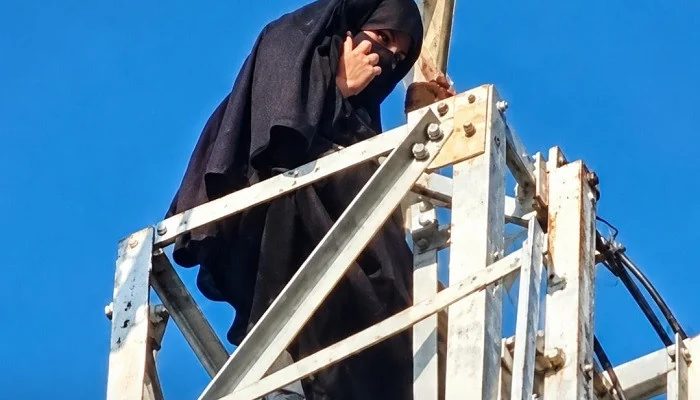
A 19-year-old woman in India's Uttar Pradesh climbed a nearly 100-foot mobile phone tower to insist on marrying the man she loved, refusing to come down until her family agreed to the marriage, according to Indian media reports. The incident took place in Bahraich district, where the woman, identified by Hindustan Times as Sahiba Begum, also known as Mehak, climbed the tower after an argument with her mother over her relationship with 21-year-old Nooruddin.
Nooruddin was working in Mumbai, about 1,000 kilometres away, when the standoff unfolded. The couple wanted to marry, but their families had opposed the relationship.
Mehak reportedly remained on the tower for around four hours as relatives, villagers, and police tried to persuade her to climb down safely. She threatened to jump if her demand was not met.
Police personnel, including women officers, reached the scene and tried to calm her down. As the standoff continued, efforts were made to contact Nooruddin and resolve the dispute between the families.
The situation was eventually resolved when a local Muslim cleric solemnised the couple's nikah over a video call, with Nooruddin joining remotely from Mumbai. After the ceremony, Mehak agreed to descend, and female police personnel helped her down safely, bringing the tense episode to an end.
Police later took the woman and her family to the station for counselling before she was sent home with her mother. The incident drew a crowd of villagers and highlighted the tensions that can arise when a couple's wish to marry clashes with family opposition.
Local authorities noted that public safety stunts of this nature pose serious risks to human life. Emergency responders faced immense difficulties in managing the crowd and coordinating with telecom operators to ensure the area was secure during the rescue operation.
Sociologists and community leaders have frequently pointed out the rigid social structures prevalent in certain rural pockets, where inter-family disputes over matrimonial choices often lead to extreme public protests and personal distress. Family counseling centers in the region have reported an uptick in young adults resorting to unconventional methods to assert their autonomy.
Experts emphasize the critical need for open dialogue between generations to prevent such dangerous escalations. Despite the unconventional start to their married life, the local community and law enforcement ensured that proper documentation and counseling were completed.
The families involved were advised to seek peaceful mediation for any future domestic concerns. For Mehak and Nooruddin, the immediate standoff ended with the marriage they had sought, after a dramatic protest high above the ground.
The event remains a striking reminder of the lengths to which some individuals will go to challenge traditional barriers.