
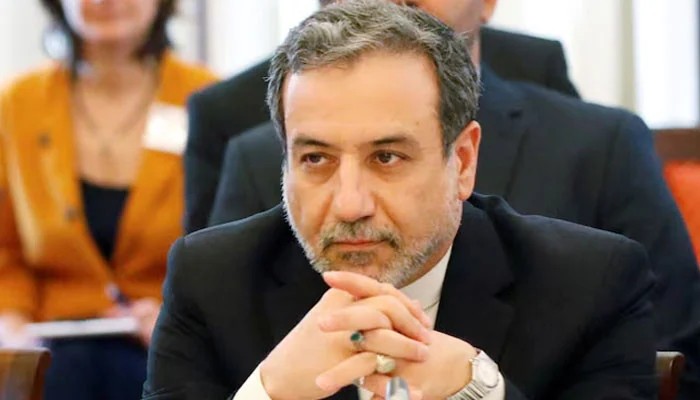
DUBAI/TEHRAN: Iran left the door open to diplomacy on Friday, six months into a war with the United States that has upended the Middle East, but only if Washington abandons its pressure campaign. "Putting diplomacy back on track isn't impossible. It hinges on US understanding of one simple fact: pressure doesn't work," Iranian Foreign Minister Abbas Araghchi posted on X on Friday. Diplomatic efforts, spearheaded by mediators including Pakistan and Qatar, have tried for months to bring an end to the war started by the US and Israel in late February to no avail. While a ceasefire was agreed in April and a memorandum of understanding towards a final peace deal was signed in June, no agreement has been forthcoming and Washington has since declared "economic warfare" against Tehran.
In the latest effort to reinvigorate diplomacy, Araghchi met his Qatari counterpart on Thursday in the Iranian capital to discuss the Strait of Hormuz, closed by the Islamic republic at the start of the war, at the tail end of a week of intense Iranian talks with Oman and Pakistan. A US naval counterblockade of Iranian ports is squeezing petrol supplies in Iran, amid a shortfall of domestic production, as the US ramps up pressure on its foe, declaring an "economic D-Day". The April ceasefire put an end to the most intense fighting, but sporadic attacks, mainly around the Strait of Hormuz, have dimmed the prospects of a final peace agreement. In a statement on Friday, US Senator Jack Reed criticised President Donald Trump over the war. "Six months later, not a single objective has been achieved," said Reed, the top Democrat on the Senate Armed Services Committee. "Indeed, he has weakened our position in the Middle East and the world significantly."
Tehran has for weeks been holding talks on the future of Hormuz with Muscat, whose territorial waters account for the other half of the strait, while insisting that Hormuz will remain closed so long as Washington has not fulfilled its commitments under the June memorandum, which calls for lifting the US counterblockade and removing sanctions. "The US should build trust, speak respectfully, acknowledge our rights and uphold commitments," Araghchi said. Iranian lawmaker Esmail Kowsari reiterated to state television on Friday that if the memorandum was not implemented and the US "does not respect its commitments, not only will the Strait of Hormuz remain closed, but the United States must be ready for our offensive actions and we will seek them in the most distant places".
Meanwhile, the US Treasury Department is due to cut off a major Egyptian bank's operations in the United Arab Emirates from the US financial system, an official said Friday, as Washington pushes to choke Iran off economically. The move impacts UAE branches of Egypt's second-largest bank, Banque Misr, blocking their banking access to US financial institutions. Washington has "warned that Iran's enablers cannot continue to enjoy access to the US dollar and the global financial system," US Treasury Secretary Scott Bessent said Friday. "Banque Misr UAE decided to find out the hard way and, today, we are taking the first step in holding it accountable for its continued, egregious support of the Iranian regime," he added in a statement first reported by the Financial Times. The Treasury Department's action will only take effect after a month-long public comment period. Egypt's central bank said officials are in contact with the American side regarding these measures.