
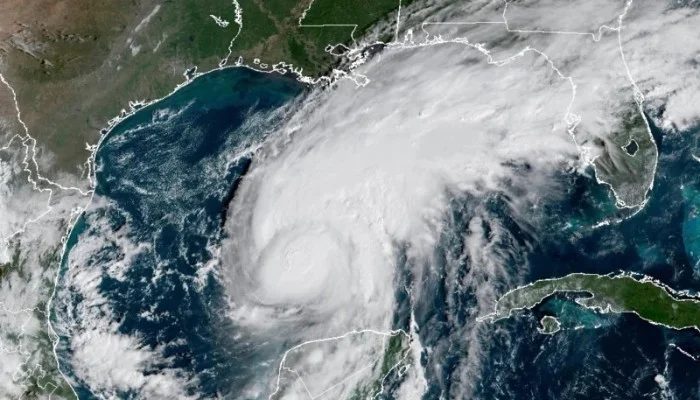
Isaias has intensified into a Category 2 hurricane as it moved towards the U.S. Gulf Coast on Thursday, October 8, 2026. The first hurricane of the Atlantic season is forecast to strengthen and bring hazards to the Florida Panhandle, southern Alabama, and southern Mississippi when it makes landfall late Friday or early Saturday, according to the Miami-based National Hurricane Centre (NHC).
State authorities have issued evacuation orders for coastal areas in Zones A and B, including Okaloosa Island, parts of coastal Fort Walton Beach, Destin, Mary Esther, and Niceville. "We are expecting Isaias to be a dangerous hurricane when it makes landfall," said Michael Brennan, director of the NHC.
"Today is the day to prepare and get ready and be in your safe place by tomorrow as conditions will rapidly deteriorate along the northern Gulf Coast as Isaias approaches," Brennan warned. Isaias had maximum sustained winds of 105 mph (165 kph), surpassing the 96 mph (154 kph) threshold for a Category 2 storm.
The hurricane was moving northeast at 14 mph (22 kph) and was centred about 260 miles (418 kilometres) south of the mouth of the Mississippi River. The NHC has issued a warning from Ocean Springs, Mississippi, to the Bay-Gulf County line in Florida, along with a storm surge warning stretching from the mouth of the Mississippi River to the Suwannee River.
Emergency management teams are coordinating with local law enforcement to ensure that residents in low-lying areas are moved to higher ground. Shelters have been opened in inland counties to accommodate those displaced by the mandatory evacuation orders.
Officials have emphasized that the storm surge poses a significant threat to life and property. Meteorologists are closely monitoring the pressure levels within the eye of the storm, noting that further intensification is possible before the system reaches the coastline.
The combination of high winds and heavy rainfall is expected to cause widespread power outages and localized flooding across the affected regions. Residents are advised to secure loose outdoor items, stock up on essential supplies, and monitor local news outlets for real-time updates.
The U.S. Coast Guard has also issued warnings to mariners to avoid the path of the storm and secure vessels in protected harbors. The Atlantic hurricane season normally runs from June 1 through November 30.
This year has seen an unusually high number of named storms, and authorities remain on high alert as the season nears its final months. The impact of Isaias is expected to be felt well inland as the storm tracks across the southern United States.
Infrastructure crews are on standby to begin restoration efforts as soon as the weather conditions permit. The Federal Emergency Management Agency (FEMA) has pre-positioned resources, including food, water, and medical supplies, in strategic locations to support the state-led response efforts.
As the situation develops, the NHC will continue to provide hourly updates on the storm's trajectory and intensity. Citizens are urged to follow the instructions of local authorities and prioritize their safety above all else during this critical period.