
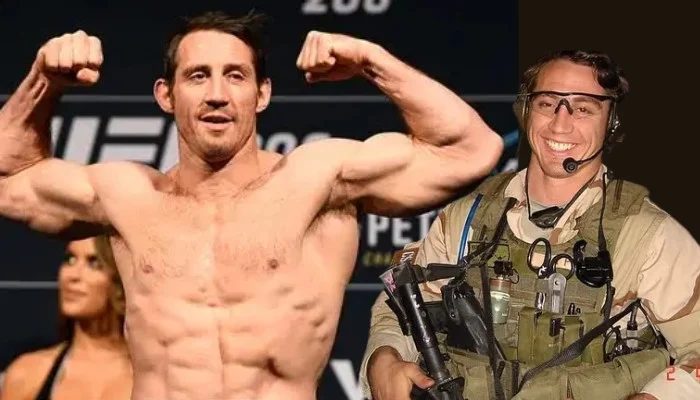
A former Ultimate Fighting Championship (UFC) fighter and U.S. Army Green Beret, Tim Kennedy, has reportedly been shot in an incident in the Democratic Republic of the Congo (DRC). The event occurred on 17 September, resulting in multiple gunshot wounds sustained by Kennedy and members of his three-man team.
According to local media, the squad came under fire during an ambush. Kennedy, a decorated U.S. Army sniper, sustained several gunshot wounds, including three to his leg.
The intensity of the firefight highlights the volatile security situation currently plaguing parts of the region. It reportedly took the team 8 hours to escape the ambush.
Kennedy has since returned to the United States, where his condition is stable. The recovery process is expected to be lengthy given the nature of the injuries sustained during the operation.
While Kennedy survived, his team member, Lance Corporal Justin Conaglen - a former elite New Zealand Special Air Service (SAS) operator - was killed in the line of fire. Another unnamed member of the team was also wounded during the skirmish.
The incident has raised significant questions regarding the presence of foreign private security contractors in the region. It remains unclear why the team was in Congo, who they were partnering with, or what specific intelligence or mission triggered the attack.
International observers are closely monitoring the situation as further details emerge. The U.S. State Department has not yet issued a formal statement regarding the specific nature of the mission or the circumstances surrounding the ambush.
The Democratic Republic of the Congo has long been a theater for various armed groups, making it one of the most dangerous environments for foreign nationals and security personnel. The ambush serves as a stark reminder of the risks involved in such high-stakes operations.
As investigations continue, the focus remains on the repatriation of the deceased and the medical care of the survivors. The families of those involved have requested privacy during this difficult time.
The military background of the team members suggests they were highly trained, yet the ambush proved to be a lethal encounter. Analysts are now questioning the level of local support or intelligence that may have been compromised prior to the attack.
Further updates are expected as the investigation into the ambush progresses. For now, the focus remains on the health of the survivors and the diplomatic implications of the incident in the DRC.