
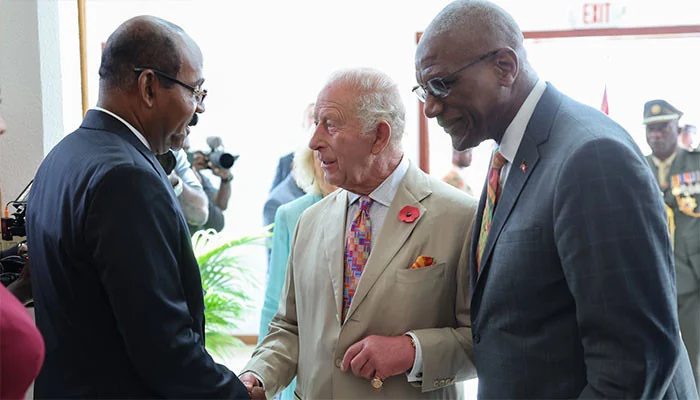
King Charles is set for a reunion with a group of young Antiguans who have completed a special heritage conservation programme established by his foundation. The King's Foundation has revealed that eight students and two tutors from the country recently completed its Building Craft and Conservation Programme, which took place across two of the charity's sites in Scotland and England, Dumfries House and Highgrove Gardens.
Over four weeks, the students learned traditional building techniques and sustainable construction methods under the guidance of expert tutors. Their training will now be put into practice back home, where they have joined forces on a 'Live Build' project at Government House in St John's.
This initiative highlights the King's ongoing commitment to fostering international cultural ties and vocational skills. The Palace shared the update on Instagram, revealing that Charles will meet the students again at Government House during his visit to Antigua.
This meeting is expected to be a highlight of his trip, showcasing the tangible results of his charitable work. However, the visit occurs against a backdrop of complex political discussions regarding the future of the monarchy in the Caribbean.
Meanwhile, the country's Prime Minister, Gaston Browne, has made clear that his government continues to have ambitions for a future without the British monarch as head of state. Browne has been vocal about his vision for the nation's sovereignty, viewing the transition to a republic as a necessary step for the country's evolution.
Speaking to journalist Chris Ship after a meeting at his office, Browne reiterated his support for reparations over Britain's role in the transatlantic slave trade. He argued that historical injustices must be addressed to foster genuine reconciliation between the United Kingdom and its former territories.
He also criticised Conservative leader Kemi Badenoch after her comments that Britain should stop apologising for its colonial past. The Prime Minister expressed his strong disagreement with her stance, suggesting that such rhetoric ignores the lived realities of those affected by historical colonial policies.
Taking aim at Badenoch, the Prime Minister said: "No wonder she is the leader of the Opposition and not the Prime Minister." This sharp rebuke underscores the intensity of the debate surrounding Britain's colonial legacy and its current diplomatic relations with Commonwealth nations.
Despite welcoming Charles to the summit, Browne also confirmed that he wants the country to replace the British monarch as head of state and become a republic. He emphasized that this move is not personal against the King but is a matter of national identity and constitutional reform.
The political climate in Antigua remains focused on these long-term goals, even as the King continues his diplomatic engagements. Observers note that the balance between maintaining traditional ties and pursuing republican aspirations will define the next chapter of the relationship.
As the visit progresses, all eyes will be on the interactions between the King and local leadership. The outcome of these discussions could set a precedent for other Caribbean nations currently evaluating their own constitutional arrangements with the British Crown.