
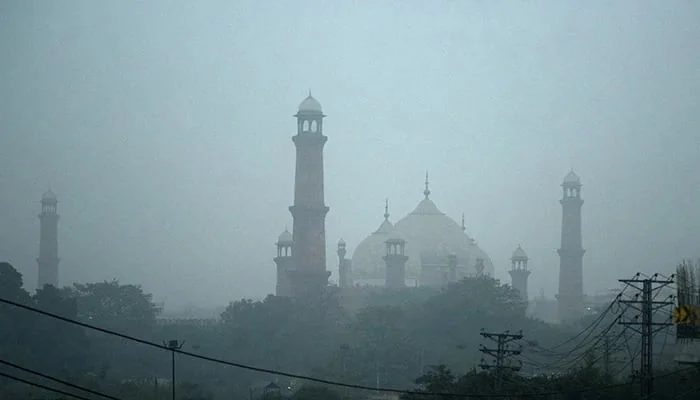
Lahore's average Air Quality Index (AQI) improved by 11 percent during the first 28 days of October compared with the corresponding period last year, as the Punjab Environmental Protection Agency (EPA) stepped up inspections, increased financial penalties, and sealed more premises for environmental violations ahead of the peak smog season.
Official data released by the EPA shows that the city's average AQI fell to 181 between Oct 1 and 28, 2026, from 202 during the same period in 2025. The improvement coincided with an increase in enforcement activity across Punjab, suggesting that intensified action against polluting industrial and commercial units is beginning to yield measurable results.
The EPA conducted 26,494 field inspections across Punjab during the first 28 days of October, compared with 22,388 in the corresponding period last year, an increase of 18 percent. Financial penalties imposed during the period rose by 25pc to Rs67.9 million from Rs54.3m in October 2025.
Enforcement also led to the sealing of 719 premises for violations, up 59pc from 452 during the corresponding period last year. However, the number of first information reports (FIRs) registered fell to 178 from 462.
Lahore's air quality indicators showed improvement in October 2026. The number of days when the city's AQI exceeded 200 fell to eight in the first 28 days of the month, compared with 15 during the same period last year, a reduction of about 47pc.
The highest daily AQI reading was 279, against 309 in 2025, while the lowest was 110, compared with 88 last year. Although the average AQI improved by 11pc, the city continued to experience unhealthy air quality, necessitating continuous and rigorous measures by provincial authorities throughout the winter season to protect public health.
Environmental experts have emphasized that long-term industrial compliance and vehicular emissions control remain vital for sustaining these improvements. The provincial administration has assured that monitoring mechanisms will remain operational around the clock to curb illegal emissions.
Citizens have also been advised to take precautionary steps, including wearing masks outdoors and avoiding strenuous physical activity during peak pollution hours.