
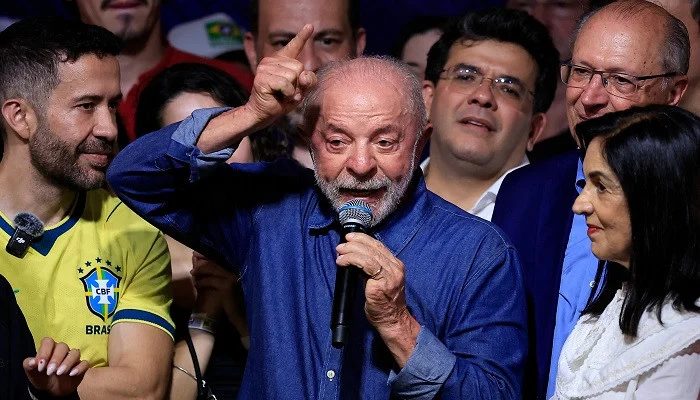
Brazilian President Luiz Inácio Lula da Silva secured an unprecedented fourth term on Sunday, according to the country's electoral court, in a surprise victory that bucked polling expectations and reversed the region's recent shift towards right-wing leadership. The veteran leftist defeated Senator Flavio Bolsonaro, the eldest son of former president Jair Bolsonaro, who had emerged as the frontrunner in the first round and sought to carry his father's far-right movement back to power.
Lula's path to re-election was far from certain. Support for the president and his Workers' Party had waned amid years of corruption scandals and rising prices.
The 80-year-old was jailed from 2018 to 2019 on corruption charges that were later overturned, paving the way for his political comeback. Leftist federal lawmaker Erika Hilton, who was with Lula in Sao Paulo, called him a statesman and a giant.
Pollsters said better-than-expected turnout powered Lula to victory. Leonardo Barreto, co-founder of consultancy Think Policy, said voters chose Lula's familiar embrace over Bolsonaro's novelty.
During the campaign, Lula highlighted his track record of falling poverty and inequality, while unemployment and deforestation hit record lows during his previous terms. He warned that Bolsonaro would cut welfare spending and hand over Brazil's sovereignty to US President Donald Trump, whose State Department led a campaign to keep the Bolsonaros in power.
Lula's win deprives Trump of a major addition to a growing bloc of friendly right-wing Latin American governments. Lula becomes the first candidate since Brazil's return to democracy in the 1980s to be elected after finishing second in the first round.
He campaigned on a mix of pragmatism and populism, rolling out reforms aimed at improving the lives of workers. Still, Lula's fourth term could be his most difficult yet, as Brazil elected its most conservative Congress since the 1980s.
Combined, Bolsonaro's Liberal Party (PL) and allies could control over 280 seats in the lower house and up to 50 in the Senate. "He is likely to be a lame duck from the start," said Oliver Stuenkel, a professor at the Getulio Vargas Foundation.
The incoming legislature will likely deepen recent trends of political polarization.