
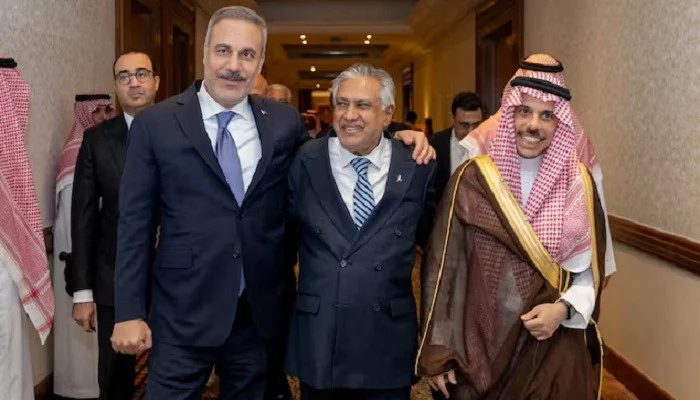
Turkiye has submitted a defence pact with Pakistan and Saudi Arabia to parliament for ratification, three parliamentary sources said on Tuesday, moving Nato's second-largest army closer to a formal mutual defence commitment with Riyadh as it faces Houthi attacks. The Makkah Joint Defence Alliance, signed by the three countries in August, stipulates that an armed attack on one member will be considered an attack on all, committing the signatories to mutual assistance against external aggression.
The agreement's first article says the parties shall use "all necessary means" to eliminate threats to one another's territorial integrity, sovereignty or internationally recognised borders. "In the event one of the parties is subjected to an armed attack or military aggression by another country or group of countries, the parties shall immediately provide assistance to the party under attack, utilising the full range of mutual assistance measures available to them," Article 2 of the agreement says.
The provision, similar to Nato's Article 5, refers to Article 51 of the UN Charter, which covers the individual or collective right of states to self-defence against armed attack. The three countries will determine the scope and nature of support after objectively assessing the assistance required and will cooperate within their available resources, including military capabilities, the same article says.
The agreement stipulates that none of the three signatories can withdraw during the first 10 years from its entry into force. After that period, any party seeking to leave must give the other signatories at least three months' written notice through diplomatic channels.
The pact will remain in force indefinitely, subject to its withdrawal provisions. Departure by a signatory will not affect activities or projects agreed upon before its withdrawal, while obligations relating to the protection of classified information will remain binding.
The agreement also requires the parties to maintain the confidentiality of classified information and documents obtained under its provisions. Such material cannot be disclosed or transferred to any state, company or individual outside the parties to the agreement.
Amendments may be made through consultations and with the unanimous approval of the agreement's designated "Core Parties". At an emergency meeting of the alliance in Riyadh earlier this month, the three countries agreed to ensure the "rapid deployment" of military forces and capabilities in Saudi Arabia amid Houthi attacks.
Turkiye, which has a robust defence industry, has condemned Houthi attacks on Saudi Arabia, expressed willingness to help meet Riyadh's military technology needs and agreed to join a Saudi-led coalition to ensure navigational safety in the Red Sea. The agreement also envisages close cooperation in the defence industry, intelligence sharing, logistical support and the fight against "all means of terrorism".
It also provides for joint training and cooperation in research, development and advanced technologies. Parliamentary ratification is required for Turkiye to formally approve the agreement.
Parliament Speaker Numan Kurtulmus will refer the agreement to the relevant committee.