
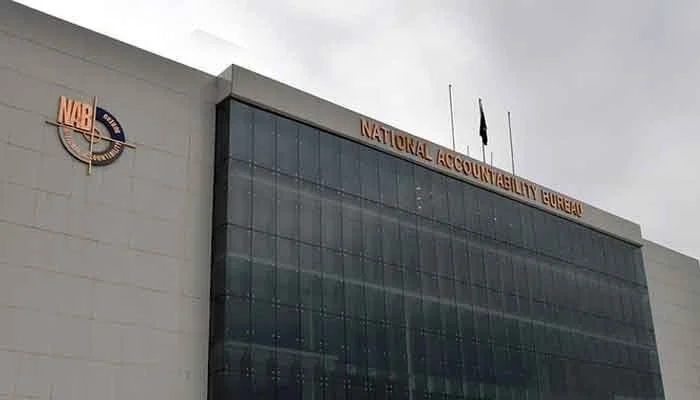
National Accountability Bureau (NAB) Chairman Lt Gen (retd) Nazir Ahmed has stated that the bureau focuses on corrupt practices within public sector projects rather than targeting individuals. "The dignity and human rights of defendants are strictly upheld by the bureau," he said while addressing a delegation of 17 participants from the 40th Senior Management Course at the National Institute of Public Administration (NIPA), Islamabad.
The delegation visited the NAB headquarters as part of its field research and professional learning programme. Addressing the participants, the NAB chairman emphasized integrity, professionalism, transparency, and accountability as essential pillars of effective public administration.
He noted that the bureau's operational philosophy is rooted in the protection of national assets and the systematic elimination of corruption from the roots of public sector development. He urged the officers to uphold the highest standards of ethical conduct and exercise their authority responsibly, particularly as they prepare to assume key leadership and administrative positions.
The chairman highlighted that the future of Pakistan's governance depends on the integrity of its civil servants, who must act as the custodians of public trust and national resources. He informed the participants that the bureau has established Accountability Facilitation Cells to enable civil servants to discharge their duties responsibly and without fear.
These cells are designed to provide guidance and ensure that administrative decisions are made in accordance with the law, thereby reducing the scope for inadvertent procedural lapses that could lead to accountability issues. He underscored their pivotal role in strengthening governance institutions, protecting the public interest, and ensuring efficient service delivery.
During the visit, NAB Director General (Operations) Amjad Majeed Aulakh briefed the participants on the bureau's establishment, statutory mandate, operational framework, and major achievements. The briefing provided a comprehensive overview of how the bureau utilizes modern investigative techniques to track financial irregularities.
The participants engaged in a detailed question-and-answer session, where they discussed the challenges of modern-day accountability and the importance of digital transformation in monitoring public projects. The chairman encouraged the officers to remain vigilant and proactive in their respective departments to prevent the misuse of funds.
The visit concluded with a mutual exchange of views on the importance of inter-institutional cooperation. The NAB leadership reiterated its commitment to working alongside other government bodies to foster a culture of transparency.
The delegation expressed their appreciation for the insights provided by the bureau's top management. This interaction is part of a broader initiative by the bureau to engage with academic and professional training institutions.
By fostering dialogue with future leaders, the bureau aims to promote a better understanding of the legal framework governing accountability in Pakistan. The chairman concluded by stating that the bureau remains dedicated to its mission of eradicating corruption through a fair and transparent process.
He emphasized that the ultimate goal is to create an environment where public sector projects are completed with efficiency, honesty, and for the benefit of the common citizen. The 40th Senior Management Course participants departed with a clearer understanding of the bureau's role in the national landscape.
The session served as a vital bridge between the theoretical aspects of public administration and the practical realities of maintaining accountability in a complex governance structure.