
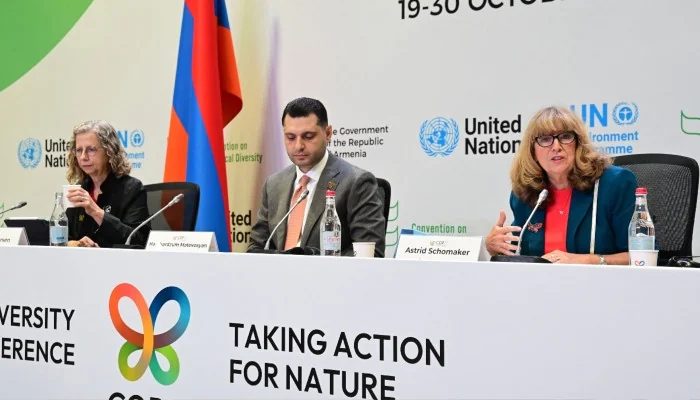
YEREVAN: Nearly 200 nations struck hard-fought agreements on Friday at a UN biodiversity summit, but the outcome was accompanied by disappointment over missed opportunities to address humanity's destructive toll on nature. Delegates cheered as crucial texts were approved in overtime, but the celebrations were tempered by acrimonious debates and regret over limited progress on some of the most contentious issues.
The COP17 summit in Armenia sought to revive a landmark commitment to halt and reverse the destruction of nature by 2030 after global efforts to meet that goal fell short. Over two bruising weeks in Yerevan, nations were urged to correct course to keep the pact alive and protect the plants, animals, and ecosystems that sustain life on Earth.
The United Nations had warned that progress was insufficient to meet the 2030 targets, including protecting 30% of Earth's land and oceans, tackling pollution and invasive species, and boosting money for conservation. "Perfect," said COP17 president Hambardzum Matevosyan in Armenia as he brought down the gavel on two major texts.
But the outcome was "not commensurate" with the crisis engulfing the natural world, said French Ecological Transition Minister Monique Barbut as the summit drew to a close. "The progress we failed to achieve here is a series of missed opportunities to speed up our response to the loss of biodiversity," Barbut said.
The final plenary stretched through Friday night and well into the next morning, with negotiations turning sour as the hours dragged on. Even as some delegates left to catch flights, others stayed behind to argue technical points.
In a draft agreement of one closely watched text, nations were urged to "accelerate" their efforts and warned that "increased action" was needed to tackle the forces driving biodiversity loss. This "represents a positive outcome... and though there are weaknesses, particularly on harmful subsidies, it does represent a step forward," Guido Broekhoven from WWF International told reporters.
Tackling subsidies and other incentives that encourage activities harmful to nature - such as fossil fuels, intensive agriculture, and overfishing - was one of the most politically fraught agenda items. "Even though the agreed decision text expresses it in weak terms, COP17 saw important political momentum to address harmful financial incentives, including subsidies," An Lambrechts from Greenpeace International noted.
A rare fight over science cast a pall over the summit, with a number of countries accused of undermining efforts to approve key reports. "We regret the increasing instances in which scientific evidence and its uptake has been challenged or constrained" by politics, said Swiss negotiator Gabriela Blatter.
"Our delegations fully respect every state's right to safeguard national interest, but science is not negotiable." A separate row revolved around finding new cash sources to fund conservation efforts - another hot-button issue with public budgets under strain amid an energy crisis and conflicts in Ukraine and the Middle East.