
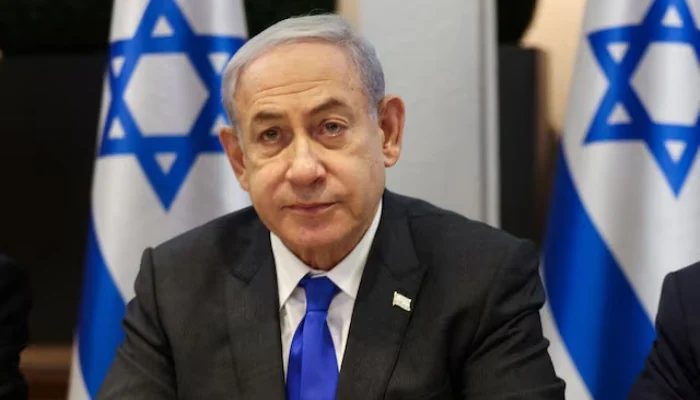
JERUSALEM: Israeli Prime Minister Benjamin Netanyahu is facing an increasingly serious threat to his political survival as his main rival, former military chief Gadi Eisenkot, has secured recommendations from 67 members of the incoming parliament, surpassing the 61-seat majority threshold, with both major Arab political groupings backing him to form the next government.
The latest development has substantially weakened Netanyahu's prospects of retaining power following the October 27 parliamentary elections, in which his right-wing and religious alliance failed to secure a parliamentary majority. His position has been further undermined by the decision of United Torah Judaism (UTJ), a longtime political ally, not to recommend him for another term as prime minister.
In a significant political shift, Israel's two major Arab-led political groupings, the Joint List and Ra'am, have announced their support for Eisenkot, giving him recommendations from lawmakers representing 67 of the 120 seats in the Knesset, compared with 46 recommendations expected for Netanyahu. The endorsement by the Arab parties is particularly significant because they have made clear that their immediate objective is to prevent Netanyahu and his government from returning to power rather than necessarily becoming part of a new governing coalition.
Herzog began the consultations on Wednesday and continued them on Thursday at the President's Residence in Jerusalem. Representatives of the various political groupings were invited to recommend a member of parliament whom they believed should receive the mandate to form a government.
The consultations included delegations from United Torah Judaism, Otzma Yehudit, the Democrats, Ra'am, the Joint List, B'Yachad, Eisenkot's Yashar party and Netanyahu's Likud. Herzog is expected to select the lawmaker whom he believes has the best prospects of assembling a functioning government.
Although the number of recommendations received by each candidate is an important consideration, the president is not legally bound to appoint the person receiving the highest number. Political analysts suggest that the current deadlock reflects a deep-seated polarization within the Israeli electorate.
The failure of the right-wing bloc to consolidate its traditional base has opened the door for alternative coalitions that were previously considered impossible. The role of the Arab parties has become the decisive factor in this election cycle.
By prioritizing the removal of Netanyahu over ideological purity, these parties have effectively acted as kingmakers in the current parliamentary arithmetic. As the process moves forward, the pressure on President Herzog to make a swift decision is mounting.
The country remains in a state of political uncertainty, with the public awaiting a resolution that could signal a major shift in national policy. The coming days will be critical as backroom negotiations continue to determine the final composition of the next cabinet.
Whether Eisenkot can successfully translate these recommendations into a stable governing coalition remains the central question for the Israeli political establishment.