
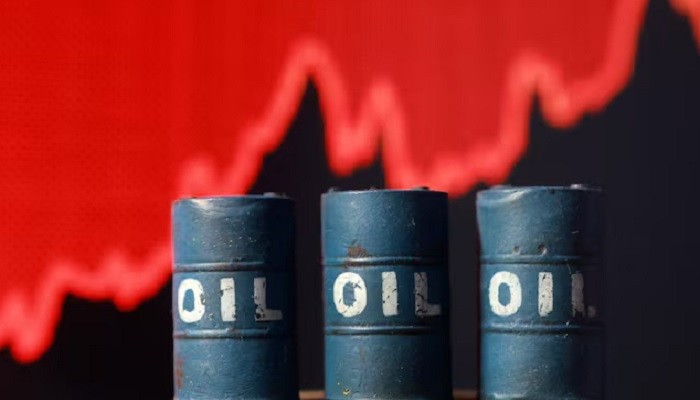
Oil and gas prices are on track for sizeable weekly gains as closely watched US-Iran talks falter, raising concerns about potential disruptions to global crude supplies. The US has threatened to ramp up economic pressure on Iran, including extending a naval blockade. Brent crude futures rose to $88.33 per barrel, up 1.45% on the day, while US oil prices increased 1.26% to $82.27.
US consumer sentiment deteriorated in early August amid the rising cost of living driven by the Middle East conflict, according to a survey released on Friday. Meanwhile, the US dollar and yields on US Treasuries fell following a surprise drop in US retail sales, further reducing expectations of a Federal Reserve rate hike at next month's meeting. The weaker dollar supported spot gold, which rose 0.69% to $4,380.03 an ounce.
Wall Street indexes declined on Friday, weighed down by tech stocks. The Dow Jones Industrial Average fell 73.41 points, or 0.14%, to 53,766.58, the S&P 500 dropped 14.93 points, or 0.19%, to 7,784.06, and the Nasdaq Composite lost 105.11 points, or 0.39%, to 26,697.93. Despite the daily dip, both the S&P 500 and the Nasdaq remained on track for their third consecutive weekly gain.
European shares finished lower on Friday and snapped a four-week winning streak as rising crude prices and renewed geopolitical tensions offset support from a resilient earnings season. MSCI's gauge of global stocks fell 1.08 points, or 0.09%, to 1,159.72, while MSCI's broadest index of Asia-Pacific shares outside Japan closed 0.29% higher at 1,640.08.
John Sidawi, senior portfolio manager for fixed income at Federated Hermes, noted a growing disconnect between geopolitical uncertainty and asset price volatility. Capital.com strategist Kyle Rodda added that geopolitical uncertainty remains the major macro roadblock to markets experiencing strong tailwinds from earnings and the monetary policy outlook. In currency markets, the yen strengthened 0.08% against the greenback to 159.37 per dollar.