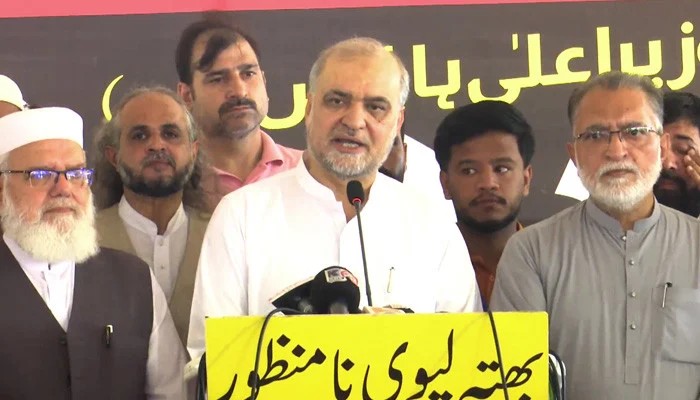
Jamaat-e-Islami Pakistan Emir Hafiz Naeemur Rehman on Sunday announced a nationwide shutter-down strike after 12th Rabi ul Awal, as the party's sit-ins in provincial capitals over the petroleum levy entered their eighth day. 12th Rabi ul Awal marks Eid Milad un Nabi (PBUH), commemorating the birth of Prophet Muhammad (PBUH). Addressing a press conference in Lahore, Hafiz Naeem said the party's campaign was progressing in the best possible manner and demanded that the federal government reduce petroleum product prices.
He said the country could not progress in the presence of flour and sugar mafias, while farmers were also struggling to obtain fertiliser at affordable prices. "Government officials are driving expensive vehicles with our money," the Jamaat-e-Islami chief said, criticising government spending. Hafiz Naeem stated that the party would launch a nationwide shutter-down strike after Eid Milad un Nabi (PBUH), making it clear that the protests would not end merely on government assurances.
He said negotiations would no longer take place on the basis of the government asking protesters to end their sit-ins in return for promises to meet their demands. "The sit-in will end only when the government implements our demands in practical terms," he maintained. The Jamaat-e-Islami protests come amid growing public concern over rising fuel prices, inflation, and soaring electricity bills, with supporters staging sit-ins since August 16 outside provincial governor houses and chief minister residences.
The federal government continues to face mounting pressure over successive fuel price increases and their impact on inflation amid volatile global oil market trends. Meanwhile, transport and petroleum dealer associations have also stepped up engagement with authorities, voicing similar grievances regarding petroleum pricing and taxation policies across the country.