
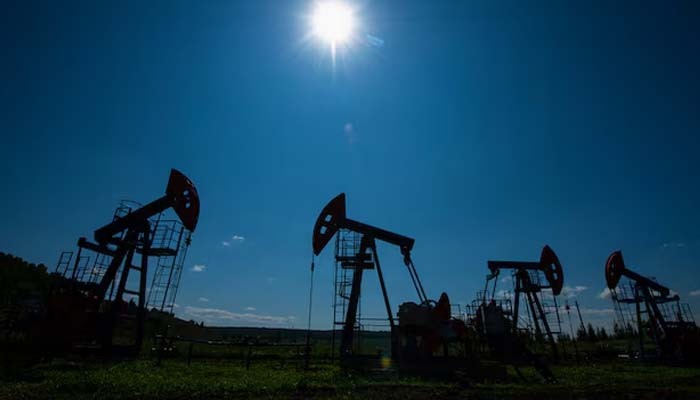
Oil prices ticked up on Tuesday, recovering slightly from a sharp plunge in the previous session as concerns persisted over Middle East supplies and the unlikelihood of a diplomatic resolution to the US-Iran war. Front-month Brent futures rose $1.02, or 1.2%, to $84.79 a barrel by 0632 GMT after dropping 7% in the previous session to a three-week low. US West Texas Intermediate (WTI) crude was up 46 cents, or 0.6%, at $80.80 a barrel following a drop of more than 5% to a nearly one-week low.
Prices had fallen after US President Donald Trump announced on Sunday that he was holding off on new attacks on Iran pending ongoing talks to end the conflict and settle claims over control of the Strait of Hormuz. However, Iranian Foreign Ministry spokesperson Esmail Baghaei rejected Trump's claim on Monday, stating that no negotiations with the US were taking place and no meetings were scheduled.
ING analysts noted that the sell-off appeared overdone given the considerable uncertainty, warning that Iran's denial of talks and Trump's threats leave ample room for renewed escalation. The dispute centers on the Strait of Hormuz, through which about a fifth of global crude oil and natural gas shipments passed before the conflict. Washington asserts a June memorandum of understanding required Iran to open the waterway, while Tehran argues the text preserved its authority.
Barclays analysts reported that crude oil and refined product net exports through the strait averaged 4.2 million barrels per day in the week ended July 31, up from 3.2 million the previous week. Meanwhile, shipping data on Monday showed six Saudi-flagged supertankers in the Gulf of Aden changing course for southern Africa, while two Saudi oil tankers crossed the Bab el-Mandeb Strait.
Traffic at the Bab el-Mandeb and Strait of Hormuz remained largely unchanged at the start of the week, though Hormuz remains hazardous. On Tuesday, the United Kingdom Maritime Trade Operations agency reported an incident 20 nautical miles northeast of Oman's Al Khasab after a cargo vessel broadcast that it was hit by an unknown projectile.
Tim Waterer, chief market analyst at KCM Trade, stated that fighting between Saudi Arabia and the Houthis has forced longer voyage times, higher insurance costs, and occasional diversions. Combined with the Strait of Hormuz, this creates a dual-chokepoint risk that prevents oil from fully unwinding its geopolitical premium.