
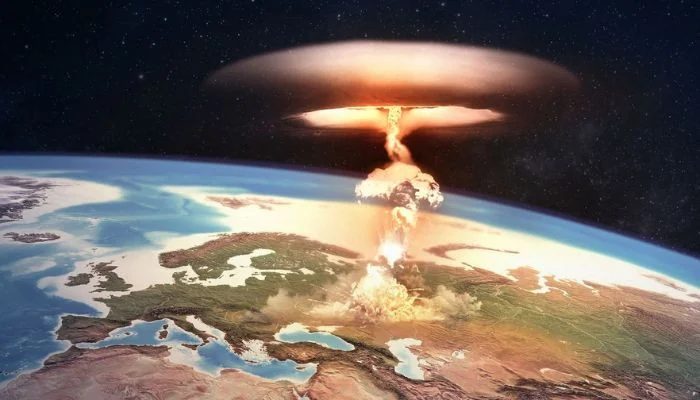
Researchers from the University of Wisconsin-Madison and Princeton University warned on November 13, 2026, that a nuclear explosion in space could destroy global satellite networks within weeks.
- A nuclear blast would render most low Earth orbit satellites inoperable.
- Radiation damage poses a greater threat than the initial explosion.
- Collisions between defunct satellites could create long-term debris hazards.
Satellite Network Vulnerability
The study simulated the impact of a nuclear detonation in space and found that the resulting radiation would cripple modern infrastructure. More than 13,000 satellites currently operate in low Earth orbit, providing essential services such as internet connectivity and weather forecasting. The researchers concluded that almost all of these assets would fail shortly after an explosion. They identified the lingering radiation as the primary danger to these systems rather than the immediate blast force.
The report also highlighted the risk of a cascading debris field. Once satellites become defunct, they could collide with one another, generating clouds of wreckage. This debris would threaten newly launched spacecraft for many years, potentially rendering certain orbital paths unusable for future missions.
Historical Precedent and Treaties
Humanity previously observed the effects of space-based nuclear testing during the Cold War. In July 1962, the United States conducted a nuclear test known as Starfish Prime. The radiation from this event damaged Telstar 1, the world's first active communications satellite. Although Telstar 1 successfully facilitated the first transatlantic television transmission, it ceased functioning in February 1963 due to the radiation damage it sustained shortly after its launch.
The global dependence on satellite technology has increased exponentially since the 1960s, making modern society significantly more vulnerable to such events. International law currently addresses these risks through the 1967 Outer Space Treaty, which prohibits countries from stationing nuclear weapons in space. The researchers noted that their latest findings have not yet undergone peer review, but they emphasized that the data reinforces the necessity of preventing the weaponisation of space to protect critical global communications and data systems.