
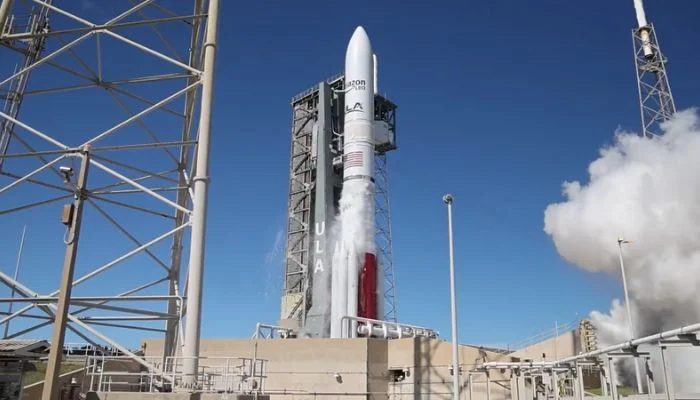
A Vulcan rocket carrying 40 Amazon internet satellites malfunctioned 10 minutes after liftoff from Cape Canaveral Space Force Station in Florida on Sunday, November 15. All 40 satellites were destroyed during the mission.
- United Launch Alliance (ULA) recorded its first total mission failure since 2006.
- The loss represents a major obstacle for Amazon as it attempts to build a satellite internet constellation to compete with Elon Musk's Starlink.
- While Amazon finished manufacturing its 1,000th satellite in September, the company has successfully placed fewer than 400 into orbit to date.
United Launch Alliance (ULA) recorded its first total mission failure since 2006. Amazon plans to launch 36 additional satellites on November 23.
The loss represents a major obstacle for Amazon as it attempts to build a satellite internet constellation to compete with Elon Musk's Starlink. Amazon previously contracted 38 launches aboard Vulcan rockets to deploy more than 1,500 satellites, which would constitute nearly half of its first-generation network.
While Amazon finished manufacturing its 1,000th satellite in September, the company has successfully placed fewer than 400 into orbit to date. This incident marks the first total mission failure for United Launch Alliance, a joint venture between Boeing and Lockheed Martin, since the company formed in 2006.
The Vulcan rocket returned to service for this mission following a nine-month hiatus caused by technical issues identified during earlier flights. ULA officials have not yet determined the specific cause of the malfunction.
Amazon faces additional pressure due to delays with other providers. Jeff Bezos' Blue Origin, which also holds a contract to launch Amazon satellites, has not launched its New Glenn rocket since an explosion occurred in May.
The failure of the Vulcan mission leaves Amazon looking toward its next scheduled deployment. The company intends to launch 36 spacecraft aboard Europe's Ariane 6 rocket on November 23.
The failure occurred just one day after SpaceX successfully caught its Starship spacecraft upon its return from orbit, highlighting the competitive gap in the satellite internet sector. Amazon continues to work toward establishing its service, formerly known as Project Kuiper, despite the loss of the latest hardware.
Despite the setback, Amazon remains committed to its long-term goals. The company has invested billions into the infrastructure required to support its satellite constellation, viewing it as a critical component of its future business model.
As the investigation into the Vulcan rocket failure continues, the aerospace community is closely watching how this will impact future launch schedules and the overall reliability of the ULA fleet.