Pakistan's climate has undergone significant and uneven changes over the past four-and-a-half decades, with rising temperatures, increasingly erratic rainfall and more frequent climate extremes emerging as major trends, according to a new scientific assessment by the Pakistan Meteorological Department (PMD).
The report, titled "How the Climate of Pakistan has Changed: Evidence from 45-year Data Record", examines climate data from 1981 to 2025 and analyses temperature, precipitation, fog and a range of extreme climate indicators across Pakistan. The report was led by Dr Faisal Saeed Syed, chief meteorologist at the PMD, who is a climate scientist and meteorologist with over 25 years of experience in operational meteorology, atmospheric science and climate research.
The assessment finds that Pakistan is warming, with nighttime temperatures rising faster than daytime temperatures. Between 1981 and 2025, the country's maximum temperature increased by an average of 0.20°C per decade, minimum temperature by 0.26°C per decade and mean temperature by 0.21°C per decade. Annual precipitation, meanwhile, showed a modest decline of 7.40 millimetres per decade, although the report says the decrease was not statistically significant because rainfall varies considerably from year to year. The warming trend is particularly pronounced during late winter and spring.
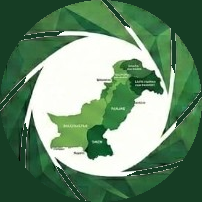
Rainfall patterns have also changed in markedly different ways from region to region. Punjab and Sindh have experienced increases in monsoon rainfall of more than 10 millimetres per decade in some areas, while parts of southern Khyber Pakhtunkhwa, Sindh and Balochistan recorded composite increases exceeding 40 millimetres. The winter of 2024-25 recorded a national rainfall deficit of 67 per cent, illustrating the country's growing hydro-climatic volatility.