
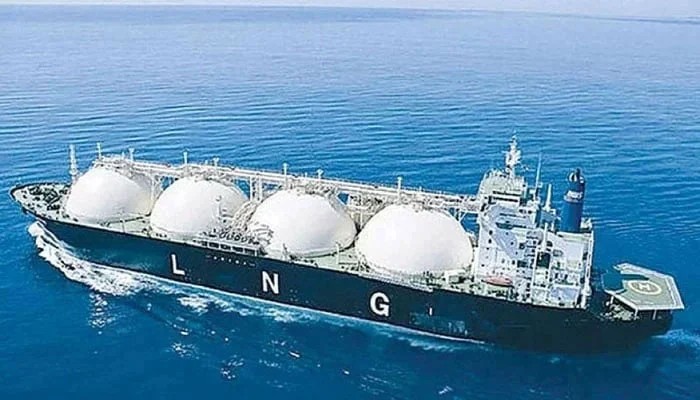
Pakistan has made a third attempt to secure a spot LNG cargo for September as surging international prices and mounting shipping risks linked to the Strait of Hormuz continued to complicate efforts to meet the country's gas requirements. Pakistan LNG Limited (PLL) has issued a fresh tender seeking bids from international LNG suppliers and traders for one spot cargo of around 140,000 cubic metres, scheduled for delivery during the September 12-16 window.
The bids are scheduled to be opened on September 8, as authorities seek to secure additional gas supplies without locking the country into another prohibitively expensive cargo at a time when global LNG prices remain under intense pressure. The latest tender comes after Pakistan cancelled two earlier spot LNG procurement attempts for September after suppliers quoted prices that authorities considered too high.
The situation has become increasingly difficult amid heightened geopolitical tensions and growing concerns over shipping through the Strait of Hormuz, a critical route for global energy supplies. The latest development follows Pakistan's decision on September 4 to reject a spot LNG offer from BP Singapore priced at $26.7128 per million British thermal units (MMBtu) for delivery between September 8 and 12.
The BP offer was the lower of two bids received by PLL. PetroChina had quoted $26.98 per MMBtu, but neither offer was accepted. The rejection marked the second time in the same week that Pakistan declined a BP Singapore offer because of the high price. Earlier, PLL had rejected BP's bid of $26.969 per MMBtu for the September 4-8 delivery window.
The repeated rejection of cargoes highlights the dilemma facing Pakistan's energy authorities: securing LNG at prevailing international prices could substantially increase the cost of electricity generation, while staying out of the spot market could create difficulties in meeting the fuel requirements of gas-fired power plants. The impact of expensive LNG is already being felt across Pakistan's power sector.
According to available data, electricity generated from spot-procured RLNG cost an average of Rs47.38 per unit in July, compared with approximately Rs35.5 per unit in June. During July, power plants generated 1,629 gigawatt-hours (GWh) of electricity using RLNG, representing 10.78 percent of the country's total electricity generation during the month. The cost of this RLNG-based generation stood at approximately Rs77.198 billion, underlining the significant financial exposure of the power sector to movements in international gas prices.
The latest tender also comes against a backdrop of a rapid increase in spot LNG prices. A cargo delivered on July 27 was priced at $21.88 per MMBtu, while cargoes delivered on July 21-22 and July 15-16 were priced at $20.6999 and $18.2345 per MMBtu, respectively. The rejected BP offer of $26.7128 per MMBtu for September therefore represents a substantial increase from prices seen only weeks earlier. Compared with the July 27 cargo, the September BP offer was around 22 percent higher. Against the July 15-16 cargo, the increase was even more pronounced, at roughly 46 percent.
For Pakistan, such increases have direct implications for electricity generation costs because the price paid for imported LNG eventually feeds into the cost of producing power from RLNG-based plants.