
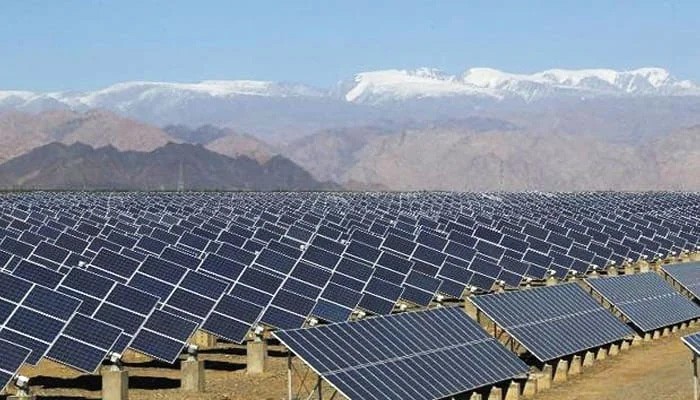
Pakistan is witnessing one of the fastest and most unusual energy transitions in the developing world. It is not being led primarily by government policy, public investment or climate targets. Households, farmers and businesses are driving it in response to electricity prices and reliability.
The numbers are extraordinary. According to the International Energy Agency's September 2026 Electrification Special Report, Pakistan imported about 51GW of solar panels between 2021 and 2025. Installed distributed solar capacity in 2025 is estimated at between 28 and 38GW, with rooftop systems accounting for roughly 80% and residential consumers for around half of installations.
Battery imports also rose sharply, from about $120 million in 2022 to nearly $300 million in 2025. Perhaps the most revealing number has nothing to do with solar. The IEA reports that the median firm in Pakistan experiences around 45 hours without grid electricity every month.
That helps explain what has happened. Pakistan's solar boom is therefore a consumer response to an electricity system that has become too expensive and, for many users, insufficiently reliable. Consumers are no longer waiting for power-sector reform.
They are building their own reliability. The solar revolution is, in that sense, a market verdict on the existing system. For decades, Pakistan's electricity debate was dominated by shortages and loadshedding.
The response was to add generation capacity through long-term, exorbitantly expensive contracts designed to attract investment when the country desperately needed power. The problem has now changed. Pakistan has substantial installed generation capacity, yet electricity remains unaffordable for many households and uncompetitive for much of industry.
Circular debt continues to accumulate. Distribution losses, theft and poor recoveries remain serious, while transmission constraints impede efficient dispatch. Consumers ultimately pay through tariffs, taxes or public debt.
Then came a technological shock. Global solar-panel prices fell sharply just as grid tariffs were rising. Businesses discovered that electricity generated on their roofs could cost considerably less than electricity purchased from the grid.
Households followed. Farmers began solarising tube wells. Falling battery prices are now allowing consumers to store daytime generation and reduce dependence on the grid after sunset.
Consumers responded to economic incentives much faster than institutions. Solar should therefore not be viewed only through the lens of climate policy. For industry, it is about competitiveness; for households, affordability; and for farmers, greater energy independence.
Pakistan has effectively developed a second electricity system alongside the first: decentralised, privately financed and increasingly independent of the conventional grid. That is a remarkable achievement, but also a serious challenge for policymakers. The electricity system was built on the assumption that utilities would sell increasing volumes of electricity and recover fixed generation, transmission and distribution costs through those sales.
Distributed solar has severely disrupted that model. As consumers generate more electricity themselves, grid sales decline. Fixed costs, however, do not disappear.