
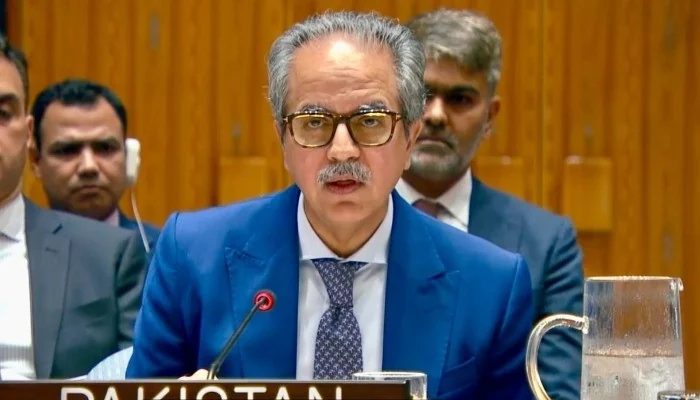
Pakistan has urged Iran and the United States to return to the Islamabad MoU and resume negotiations on the Iranian nuclear issue, warning that escalating tensions and divisions within the UN Security Council were undermining efforts to resolve the dispute. Speaking at a Security Council briefing on Iran and non-proliferation, Pakistan's Acting Permanent Representative to the UN, Ambassador Usman Jadoon, said the situation surrounding Iran's nuclear programme had deteriorated sharply in recent months, making a diplomatic settlement more urgent.
"On the one hand, the ground situation in the past few months has been marked by deep tensions and continued hostilities. On the other, profound mistrust and differences of opinion have led to a breakdown of consensus within the Council on this matter," he said.
Jadoon cautioned that recent developments had highlighted the fragility of the situation and the risk of further escalation, underscoring the need for renewed diplomatic efforts. He called for the revival of cooperative multilateralism and mutual understanding to break the deadlock, urging the Security Council to act with unity of purpose and support efforts towards a peaceful settlement.
"We hope that the Council will act with unity of purpose and back efforts towards a pacific settlement. Pakistan urges all sides to exercise restraint, refrain from irresponsible and destabilising rhetoric, actions and postures that could escalate tensions and increase the risk of conflict, and choose a path that delivers peace, security and stability for all," he said.
Pakistan reaffirmed its position that outstanding issues should be resolved through peaceful means, diplomatic engagement and sustained dialogue. Jadoon said a negotiated settlement of the Iranian nuclear issue should be pursued in accordance with the rights, obligations and responsibilities of the parties concerned, while safeguarding the nuclear non-proliferation regime and regional and international peace and security.
He also stressed that any concerns over non-compliance should be addressed through the competent technical bodies, including the International Atomic Energy Agency (IAEA), without politicisation and in accordance with the relevant parties' rights and obligations. "The IAEA must be enabled to carry out its work without any hindrance and within its technical mandate," he added.
Meanwhile, Secretary General Makkah Defence Alliance Lt. Gen. (retd) Nauman Mahmood on Wednesday called on Deputy Prime Minister and Foreign Minister Senator Mohammad Ishaq Dar. Dar congratulated Nauman on his appointment and wished him success in his important responsibilities.
"He highlighted Pakistan's ongoing diplomatic efforts for regional and international peace and stability, and underscored the critical role of the Makkah Defence Alliance in helping promote lasting peace in the region," said the Foreign Office in a statement. Earlier, Dar spoke with his Omani counterpart Sayyid Badr bin Hamad bin Hamood Al Busaidi over the phone.
"Both ministers agreed to follow up on the understandings reached during the visit to further strengthen cooperation in trade, investment and energy. They underscored the importance of continued high-level exchanges to sustain the momentum in bilateral relations.
The two ministers also exchanged views on regional developments and reaffirmed their shared commitment to regional peace and stability," the statement concluded.