
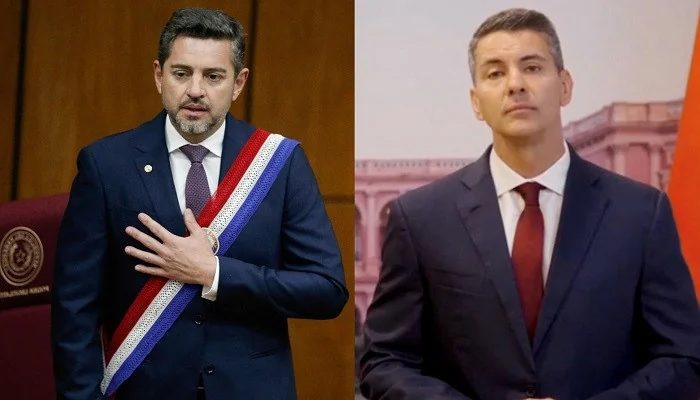
Paraguay's political leadership changed hands on Friday after lawmakers voted to oust President Santiago Pena over the collapse of a major digital bank, whose frozen accounts left nearly three million customers unable to access their money. Vice President Pedro Alliana was sworn in as his successor, assuming the presidency for the remainder of the current term, which ends in August 2028.
The fallout also followed Pena beyond his removal from office. Prosecutors ordered the 47-year-old placed under house arrest on suspicion of breach of trust, pending his appearance before the Attorney General's Economic Crimes and Anti-Corruption Unit.
The order came shortly after the Senate's impeachment verdict, as public anger over the bank's collapse fuelled protests across the country. The Senate declared Pena guilty of poor performance in his duties, with all 44 senators present voting for his removal.
The decision came despite Pena having offered his resignation on Thursday, as lawmakers pressed ahead with impeachment proceedings that would strip him of the parliamentary immunity normally granted to former presidents. Under Paraguay's constitution, elected former presidents become lifetime senators, enjoying parliamentary immunity from prosecution.
By removing Pena through impeachment rather than accepting his resignation, lawmakers prevented him from acquiring that status, leaving him exposed to criminal proceedings. Pena did not attend his Senate trial, despite previously pledging to defend himself.
His lawyers argued that he had been denied sufficient time to prepare his defence and challenged the proceedings, reserving the right to appeal to Paraguay's Supreme Court and international human rights bodies. The president had requested an additional 72 hours to prepare his case, but senators rejected the request by 39 votes to three.
The crisis erupted after the Central Bank took control of Ueno Bank on Tuesday, citing breaches of minimum solvency requirements and concerns over its financial position. The intervention froze accounts and bank cards belonging to nearly three million customers, leaving many unable to access their savings.
The lender, which grew rapidly into one of Paraguay's largest banks, had attracted customers through its digital-first model and served many people who had previously lacked access to banking services. The collapse has raised questions over the bank's links to the political establishment and the handling of public funds.
Pena previously held a stake in Grupo Vazquez, the conglomerate that controlled Ueno, but said he sold his shares last year. Lawmakers accused him of a conflict of interest, using political influence to channel public funds into the bank and failing to ensure adequate regulatory oversight.
The impeachment charges also concerned the appointment of former Ueno executive Carlos Carvallo to head the Central Bank and allegations that the state pension fund had deposited hundreds of millions of dollars at the lender beyond legal limits. According to an Associated Press of Pakistan (APP) report, Ueno had accumulated more than $800 million in public funds, including around $355 million from the state pension fund.
Pena denied wrongdoing and apologised to the public on Thursday, saying he had never intended to betray the trust placed in him.