
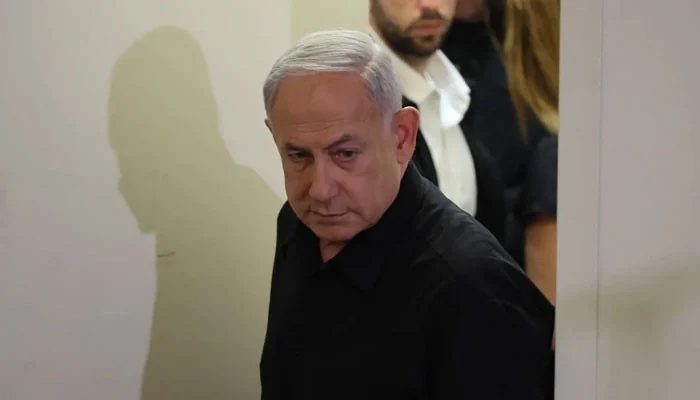
JERUSALEM: Prime Minister Benjamin Netanyahu's bloc on Thursday piled pressure on Arab-Israeli leaders over accusations of foreign funding, in a push to neuter parties that could hold the key to forming a government after an inconclusive election. Israeli President Isaac Herzog, who holds a largely ceremonial role, called for an investigation into allegations but cautioned against stigmatising the entire Arab-Israeli community, who voted at unprecedented rates.
Supreme Court Justice Noam Sohlberg, a conservative who heads the Central Elections Committee, requested an investigation by the Shin Bet security service into allegations that the Arab grouping Raam received money from Qatar. The Shin Bet (Israel Security Agency) is investigating suspicions that foreign entities, potentially including Qatar and Turkiye, allegedly funneled money into Israel to influence voting in Arab communities, following a directive from Central Elections Committee chairman Justice Noam Sohlberg to investigate suspected foreign funding and election bribery, The Jerusalem Post reported on Thursday.
Israel was nearing the completion of ballot counting from Tuesday's election, the first since Hamas's October 7, 2023 attacks, with neither Netanyahu nor the opposition bloc led by former military chief Gadi Eisenkot appearing able to secure a majority. Eisenkot said the official probe into the claims should run its course without interference, but also accused Netanyahu of seeking to delegitimise the election results.
"The Raamgate scandal is a political earthquake. Israel's elections have been stolen!" Netanyahu's Likud party said.
Raam chief Mansour Abbas said his party had "no connection whatsoever to the affair", and welcomed an investigation. The Joint List, which unites three Arab-majority parties, accused Netanyahu and his allies of a "campaign of incitement" that "exposes their fear" of Arab citizens' political strength.
The Shin Bet cautioned that its investigation into the claims was not over, but added it was not intended to "cast aspersions or place blame on an entire sector that went out to vote in a democratic and lawful manner". Eisenkot said he had been briefed by the Shin Bet and the elections committee, adding it was "too early to understand what happened, and whether anything happened at all".
However, he continued: "It's already clear that Likud and Netanyahu have embarked on a coordinated, organised campaign seeking to delegitimise the results of the election." With nearly all of the vote counted, Netanyahu's bloc was at 53 seats and the opposition forces led by Eisenkot on 48 -- both under the 61 needed to form a government.
The two Arab formations were on track for an unprecedented 19 seats between them. Meanwhile, Qatar's foreign ministry spokesman on Thursday rejected accusations "made by certain Israeli politicians and their contacts in the media" that his country had interfered in the Israeli elections.
"We categorically deny allegations that Qatar has interfered in Israeli elections or funded any activities intended to influence their outcome," said Majed Al Ansari. "They accuse Qatar of buying off Benjamin Netanyahu, the Israeli political left and now, in this latest campaign, the Arab vote...
These accusations are ridiculous and dangerous in equal measure." Separately, Turkiye on Thursday rejected similar accusations.