
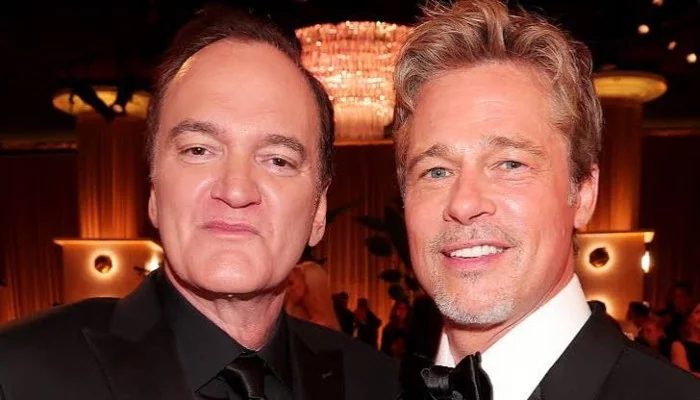
Quentin Tarantino has admitted that he felt he was letting Brad Pitt down when he decided not to direct the Cliff Booth sequel himself. The filmmaker made the comments in an interview with Empire, discussing The Further Mis-Adventures of Cliff Booth.
Tarantino wrote a script for the film but chose not to make it his tenth and final movie, adding, "I felt bad about that." Pitt won an Oscar for playing Cliff Booth in Once Upon a Time... in Hollywood, and both men were keen to continue the character's story.
The actor was disappointed he would not be returning to the role under Tarantino's direction. Pitt then asked David Fincher, who directed him in Seven, Fight Club, and The Curious Case of Benjamin Button, to read Tarantino's script.
Fincher agreed, provided Tarantino approved, and ended up "smitten" with the project. Tarantino noted that the fact Fincher spent "a year-and-a-half" working on his material "said a lot about what was on the page."
The film is set in 1977 Hollywood, where Cliff Booth works as a studio fixer. The narrative explores the gritty underbelly of the film industry during that era, a subject Tarantino has long been fascinated by.
The cast includes Pitt, Elizabeth Debicki, Yahya Abdul-Mateen II, Carla Gugino, Scott Caan, and Timothy Olyphant. Each actor brings a unique depth to the ensemble, which has generated significant buzz among critics and fans alike.
Production values for the film have been described as top-tier, capturing the aesthetic of late 70s cinema with precision. The collaboration between Tarantino's writing and Fincher's visual style is highly anticipated.
It opens exclusively in IMAX on 25 November and arrives on Netflix a month later. Industry analysts expect a strong opening weekend, given the star power involved in the project.
Fans of the original film have expressed excitement on social media regarding the continuation of the Cliff Booth saga. The transition of directorial duties remains a major talking point in Hollywood circles.
Ultimately, Tarantino remains supportive of the project, emphasizing that the story deserved to be told regardless of who sat in the director's chair. The film stands as a testament to the collaborative spirit of modern cinema.