
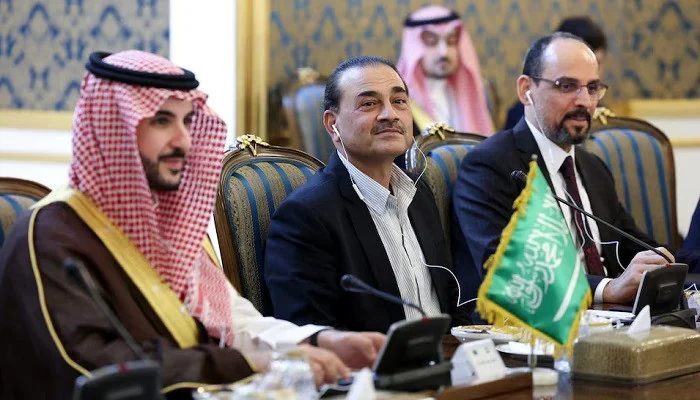
Saudi Arabia has urged parties to the regional conflict to seize diplomatic opportunities to resolve the crisis, following high-level talks between Iranian officials and a delegation representing the Makkah Joint Defence Agreement countries in Tehran. The Saudi Ministry of Foreign Affairs said on Monday that the visit, led by Defence Minister Prince Khalid bin Salman, was aimed at reducing tensions, advancing dialogue and supporting ongoing mediation efforts by Qatar and Pakistan.
It stressed the importance of opening channels of negotiation to prevent a return to military escalation in the region and paving the way for a comprehensive agreement that would bring the crisis to an end and secure long-term peace and stability. The ministry also reaffirmed the pivotal role of the Makkah Joint Defence Agreement countries in strengthening regional security and stability and working with other nations to promote peace.
The Tehran meeting brought together Prince Khalid, Pakistan's Chief of Army Staff General Asim Munir and Turkish intelligence chief Ibrahim Kalin. The officials met with Iranian President Masoud Pezeshkian and senior Iranian officials, including Mohsen Rezaei, secretary of Iran's Supreme National Security Council.
This high-level engagement marks a significant shift in regional diplomatic posturing. The talks represent the first high-level meeting between Iran and the three countries since Saudi Arabia, Pakistan and Turkiye signed the Makkah Joint Defence Agreement in August.
The discussions came amid a wider regional conflict involving Iran, the United States and Israel, which has increasingly spread its influence to Saudi Arabia and Yemen, threatening global energy supplies. Regional security concerns remain high, including renewed Houthi attacks on Saudi territory, rising tensions around the Strait of Hormuz and the ongoing impact of the US blockade of Iranian ports.
On Monday, the Houthis claimed drone attacks on Saudi Arabia's East-West crude oil pipeline pumping stations and King Khalid International Airport in Riyadh. While Saudi authorities had not immediately confirmed the reported attacks, the regional atmosphere remains volatile.
Saudi Arabia stated that the Tehran initiative was intended to complement the mediation efforts led by Qatar and Pakistan, with the primary aim of resolving the crisis through dialogue and diplomacy rather than renewed military confrontation. Analysts suggest that the inclusion of Pakistan and Turkiye in these security discussions provides a neutral platform for Iran and Saudi Arabia to bridge their differences.
The involvement of General Asim Munir highlights the strategic importance Pakistan places on regional stability, given its historical ties with both Riyadh and Tehran. The international community is closely watching these developments, as any de-escalation between Riyadh and Tehran could have a domino effect on other regional proxy conflicts.
Diplomatic sources indicate that further rounds of talks are expected to take place in Islamabad and Ankara in the coming months. As the situation evolves, the focus remains on the implementation of the Makkah Joint Defence Agreement as a framework for collective security.
The Saudi leadership emphasized that while they are prepared to defend their sovereignty, they prefer a political solution that ensures the safety of the entire Middle East region. Ultimately, the success of these mediation efforts depends on the willingness of all involved parties to adhere to the proposed ceasefire terms and engage in transparent negotiations.
The coming weeks will be critical in determining whether this diplomatic window leads to a lasting peace or remains a temporary pause in hostilities.