
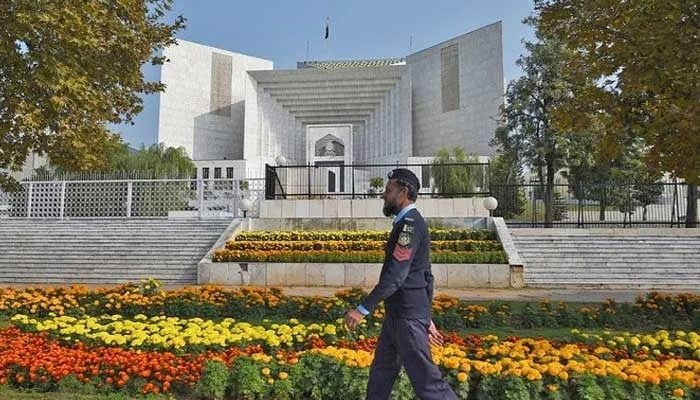
The Supreme Court on Thursday ruled that public authorities must act responsibly and manage their internal affairs with morality, while civil servants must show administrative restraint and avoid exploiting administrative uncertainties for personal gain. A two-member bench of the apex court, comprising Justice Ayesha A.
Malik and Justice Naeem Akhtar Afghan, issued a judgment in a matter relating to the seniority of Pakistan Railways (PR) employees. The petitioners challenged the consolidated judgment dated 19.09.2025, passed by the Federal Service Tribunal (FST), Islamabad, whereby the tribunal set aside the department's provisional seniority lists dated 29.06.2022 and 20.03.2023 and sought fresh seniority lists strictly in accordance with the 1990 Rules.
According to the case facts, the petitioners and respondents joined Pakistan Railways after passing the Central Superior Services (CSS) examination, spanning from the 28th to the 37th Common Training Program. As per the terms and conditions of their service, they were probationers at the time of appointment and subsequently became permanent employees of the department.
The petitioners contended that at the time of their induction, their seniority was determined based on CSS exam merit, in accordance with longstanding departmental practice, rather than the 1990 Rules. They argued that the tribunal's decision to retrospectively apply these rules caused significant disruption to their career progression.
After hearing the case, the Supreme Court allowed the petitions and set aside the tribunal's decision. The court emphasized that administrative stability is essential for the functioning of public departments and that settled matters should not be reopened without compelling legal necessity.
"The longstanding practice of assigning entry seniority according to CSS merit created a legitimate expectation among civil servants who relied upon it and earned regular promotions," says the 7-page judgment authored by Justice Ayesha A. Malik.
The bench noted that the department had followed a consistent policy for years, which had become the bedrock of the officers' career paths. The court held that Rule 7 of the 1990 Rules applied only to officers on probation at the initial entry into BS-17 and could not retrospectively disturb settled seniority, accrued rights, or promotions to BS-18, BS-19, and BS-20, which are protected under Section 8(4) of the Civil Servants Act, 1973.
Furthermore, the judgment highlighted that the principle of 'locus poenitentiae' - the power to recede from a decision - cannot be used to arbitrarily strip civil servants of their earned seniority. The court observed that the department's attempt to recalculate seniority after decades of service was legally flawed and administratively disruptive.
"Therefore, existing seniority cannot be recalculated or disturbed through retrospective application of the 1990 Rules," the judgment concludes. The apex court's ruling provides much-needed clarity for the officers involved, effectively restoring the seniority lists that were in place prior to the tribunal's intervention.
Legal experts view this judgment as a significant precedent for service matters, reinforcing the sanctity of established departmental practices and the protection of civil servants' vested rights against sudden, retrospective policy shifts.