
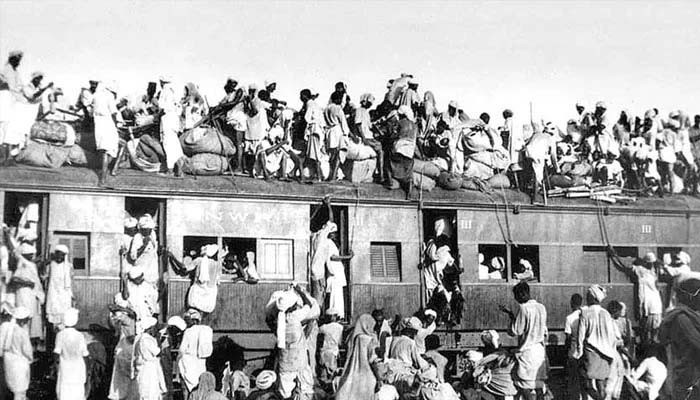
It is fashionable, when the state of the country is discussed, to hold the funeral first and check the pulse afterwards. Lamentation passes for analysis; the longest face is presumed the best-read. The faults are real - but a lament is not an audit, and before pronouncing a verdict on any enterprise, fairness requires that someone read the original prospectus.
On what argument, exactly, was the idea of this country floated? Return to the debate of 1940-47, and to a man who deserves better than his admirers have given him. Abul Kalam Azad was not a sentimentalist. His opposition to Partition was an argument - specific, verifiable claims about the Muslim future. He said Muslims in aggregate could bargain within a united polity and would be fatally weakened in fragments; that the millions left behind would be hostages; that rights secured by a constitution would outlast rights secured by a border; and - with the confidence of a man who had spent his life among Congressmen - that the majority could be trusted: not to be generous, but to be rational.
Hussain Ahmad Madani had made the theological case in 1938: nations are constituted by territory, not creed; Hindus and Muslims were two currents of one Indian river; nothing in the Sharia forbade Muslims from living where their faith was free. From a third corner Maududi rejected the whole frame - nationalism itself, composite or separate, was the disease; the League's Pakistan would be a national state of Muslims, not an Islamic order - and he declined the merchandise on inspection.
Three positions, all held by serious men, all sincerely. But losing an argument in 1947 is not the same as being wrong about 1947, and it has become customary here to treat the two as identical - just as the opposite camp books every Pakistani failure since as posthumous income for Azad. Both customs are flawed bookkeeping.
Let us do these men the courtesy their memory is owed: take the case seriously, and run it properly. The method is simple, if unusual. Not "was Partition justified?" - a question that invites eloquence and settles nothing - but: what would have to be true, today, for Azad to have been right? Each of his claims implies a testable proposition about 2026. If they hold, the mourning is earned. If they collapse, we may set that grief down and attend to griefs we can actually do something about.
Counterfactuals usually fail for want of records: the road not taken keeps none. History rarely runs a controlled experiment; in 1947 it did, and filed the results next door. The Muslims of western Uttar Pradesh were, until that August, politically indistinguishable from the people who became Pakistanis - same faith, same heroes, same poets, same quarrels. Indeed the League's demand drew its loudest support from the very provinces the proposed Pakistan would never include - those men were campaigning for a principle, not a postcode.
Then a line was drawn; one population crossed, and the other stayed. The control group is alive, seventy-nine years on - and the data on it has been collected, with an irony history must have savoured, chiefly by the Indian state itself. Begin with Azad's central contention, which was arithmetical. Undivided, Muslims would have been nearly a third of India - too large a bloc to ignore, large enough to hold the balance in any coalition. Partition, on this reading, was not merely unnecessary; it was the one act that could make Muslims powerless.