
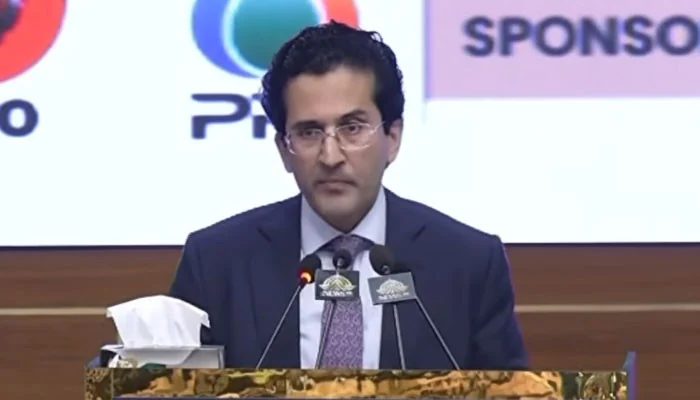
Petroleum Minister Ali Pervaiz Malik announced a special security framework for mine sites during the Pakistan Minerals Investment Forum 2026 in Islamabad on Friday.
- Petroleum Minister Ali Pervaiz Malik spoke at the Pakistan Minerals Investment Forum 2026.
- The government granted over forty mineral exploration licences in Chagai and Khuzdar.
- Officials advanced copper smelting to capture greater value across the supply chain.
Security and exploration updates
Petroleum Minister Ali Pervaiz Malik stated on Friday that the government remained committed to ensuring security and safety at mine sites, along logistics routes, and for trained human resources to support uninterrupted mining operations in a conducive environment. Addressing the two-day Pakistan Minerals Investment Forum 2026, known as PMIF26, he noted that special arrangements strengthened the security framework for mining operations. He added that the administration of Prime Minister Shehbaz Sharif invested in improving geological data through the Geological Survey of Pakistan because investors could not accurately assess project risks without reliable scientific information.
Malik reported that more than forty mineral exploration licences had recently been granted in the Chagai and Khuzdar districts of Balochistan alone, reflecting growing private sector participation in strategic and critical minerals. The government advanced copper smelting to capture greater value across the supply chain, moving from mining to finished metal, as the country traditionally exported raw ore and concentrates while importing finished products to meet domestic requirements.
Infrastructure and scientific mapping
The minister explained that officials developed road connectivity between the mineral-rich belt of Chagai and Gwadar Port, alongside linking Thar coal resources with power plants, to facilitate transportation and connect Pakistan mineral resources with international markets. He pointed out that discovering a mineral deposit represented only the beginning because commercially viable mining projects required power, water, roads, railways, and access to international markets, meaning infrastructure development aligned with sector ambitions.
The administration strengthened the scientific foundation of the mineral sector through accelerated geological mapping, including detailed surveys at a scale of 1 to 50000 to identify mineral prospects across the country. Exploration efforts focused increasingly on minerals of strategic importance to global investors, such as copper and gold in Chagai and western Balochistan, lithium, tin, and tungsten in Gilgit-Baltistan, and antimony and base metals in Khyber Pakhtunkhwa. Modern geochemical and geophysical surveys, exploratory drilling, and the upgrading of advanced geoscience research laboratories with sophisticated analytical technologies complemented these initiatives.
International technical cooperation, including the UK-Pakistan Geoscience Capacity Building Programme, helped strengthen expertise in digital mapping, airborne surveys, and mineral assessment. Furthermore, the government digitised decades of geological information to provide investors with better access to reliable data, reduce exploration uncertainty, and support informed investment decisions.