
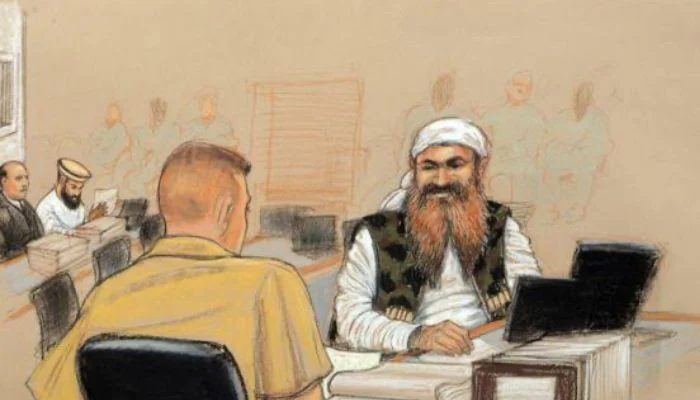
The Supreme Court on Monday, October 19, declined to review former Defense Secretary Lloyd Austin's decision to cancel plea agreements with Khalid Sheikh Mohammed and two co-defendants accused of plotting the September 11, 2001, terror attacks, leaving the deals revoked and the long-stalled case headed back to military courts.
In an unsigned order, the justices turned away appeals from Mohammed, Mustafa al-Hawsawi and Wali bin 'Attash, who argued that the U.S. Court of Appeals for the D.C. Circuit overstepped its authority last year when it sided with the government.
Justice Brett Kavanaugh didn't participate in the consideration of the case. In 2024, the two agreements made following more than two years of negotiations would have spared the prisoners the death penalty in return for pleading guilty to all counts and undergoing a public sentencing hearing in which the men would answer questions from the victims' relatives and other survivors.
The two agreements had been signed off by military prosecutors and the Defense Department's top official for Guantanamo Bay before Austin unilaterally canceled them, declaring that such an important decision "needs to be made by me." The administration continued defending Austin's move.
In 2024, the military judge found that the agreements are "valid and enforceable," while the military appellate court and subsequently the D.C. Circuit found that it was indisputably within Austin's power to back out of the agreements.
Legal analysts note that this decision effectively closes off immediate domestic judicial avenues for the defendants to challenge the cancellation of their plea deals. The case now returns firmly within the purview of the military commission system.
The original plea agreements had sparked intense debate across the United States, drawing sharp criticism from various political figures and families of the victims who felt that sparing the defendants from the capital punishment undermined full accountability. Conversely, defense attorneys and human rights advocates maintained that the negotiated settlements represented a pragmatic pathway to achieving finality and ensuring some measure of transparency through the public hearings mandated under the terms.
The United States government has maintained strict security protocols around the proceedings at Guantanamo Bay, where the high-profile tribunal has faced numerous logistical and procedural hurdles spanning more than two decades since the initial detentions. As the legal battle shifts back to the military commissions, attorneys on both sides are preparing for protracted procedural motions, meaning a definitive resolution to the landmark terrorism prosecution remains distant.