
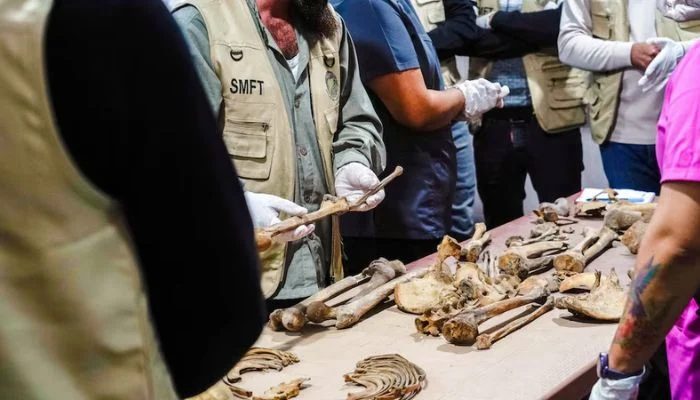
Syria has identified missing people through DNA testing for the first time, offering new hope to thousands of families who have spent years searching for relatives who disappeared during the country's civil war. Yet, the breakthrough also shows just how far short Syria is from solving one of its most agonizing mysteries.
The country's National Commission for Missing Persons receives an average of 100 new reports of missing people every day. In one case, Mohammad Hamadah finally learned what happened to seven relatives who disappeared nearly a decade ago.
His parents and five siblings were killed when an airstrike destroyed a building in Raqqa. Years later, investigators found human remains in the debris and sent bones to Guatemala for DNA testing.
All seven victims were identified by the results. However, Mohammad's grandfather, who was also present with the family, remains missing.
The discovery comes nearly two years after the overthrow of former president Bashar al-Assad, whose government was accused of imprisoning and forcibly disappearing thousands of people. Syria's missing-persons commission estimates that between 120,000 and 300,000 people remain unaccounted for.
Years of fighting prevented investigators from accessing burial sites, while Syria still lacks sufficient forensic laboratories, equipment, and trained specialists. The commission has identified victims in two other cases, although large-scale DNA testing has yet to begin.
The first confirmed identifications are a welcome relief to families who have long been waiting for answers to questions about what happened to their family members. The process remains slow, hampered by the sheer scale of the conflict's devastation and the lack of infrastructure.
International aid organizations are currently working with local authorities to establish a more robust database. This effort is critical for the long-term reconciliation process in a country torn apart by years of violence.
For many, the wait continues as the commission struggles to process the backlog of cases. The emotional toll on the survivors is immense, as they balance the hope of closure with the reality of the ongoing search.
As the nation attempts to rebuild, the identification of the missing stands as a central pillar of justice. Families continue to provide samples, hoping that the next report will bring news of their loved ones.
The government has pledged to increase funding for forensic research, though experts warn that the process will take decades to complete given the number of victims involved.