
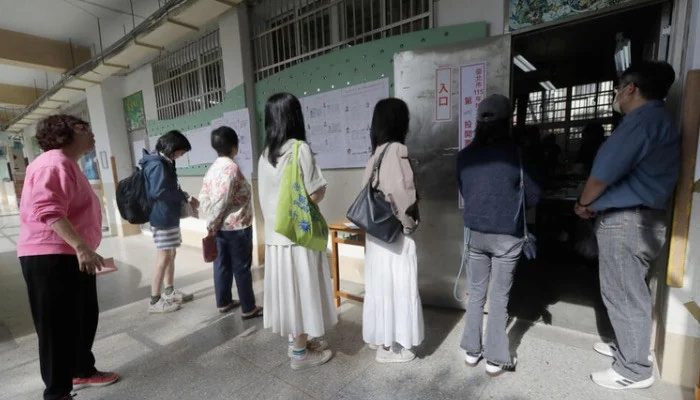
Chiang Wan-an, the mayor of Taipei and member of the opposition Kuomintang (KMT), has managed to win a mayoral race against his opponent, Puma Shen, from the Democratic Progressive Party (DPP), in a tightly fought race, as voters in Taiwan participated in elections on an island-wide scale. As reported by electoral officials, Chiang got about 53.8 per cent of the vote, compared to Shen, who secured 45.6 per cent of the vote in the election.
- Chiang Wan-an won the Taipei mayoral race with 53.8% of the vote, defeating DPP candidate Puma Shen who received 45.6%.
- The KMT retained its stronghold in Taipei, preventing the DPP from taking control of the capital for the first time since 1994.
- China was accused of attempting to influence the elections through disinformation and military activity, but the Chinese government denied the allegations.
Shen, who is 44 years old, acknowledged defeat and congratulated his opponent, while addressing thousands of his supporters and stating that he respects their decision. Chiang, aged 47, thanked the voters and stated that it was a victory for democracy. The result ensures that the KMT will retain its stronghold in Taipei and does not allow the DPP to gain control over the capital's mayoral office for the first time since 1994.
Taiwan
Shen, a legislator and strong critic of China, has gained a lot of public attention due to his online campaigns and grassroots mobilisation. Though it suffered a defeat in Taipei, the ruling DPP party made substantial gains in other areas. Candidates of the DPP won some significant areas such as Taichung, Kaohsiung, Tainan, Yilan and Changhua.
China
In addition, the KMT kept their positions in some other important regions, namely Taipei and Taoyuan, while New Taipei was closely contested. China was one of the background factors to the ongoing elections. According to Taiwan, China tried to impact elections using disinformation and political pressure; the accusations were denied by the Chinese government.
Moreover, the defence ministry of Taiwan noted about 33 sorties of Chinese military planes around the island within the period from Friday to Saturday. The elections concerned over 11 thousand local government offices in 22 cities and counties. Besides, people took part in a referendum on the return of nuclear power amid increasing concerns regarding energy security and the need for electricity in the artificial intelligence sector.
Though the results can determine local politics in Taiwan, specialists warn that they do not forecast the 2028 presidential elections.