
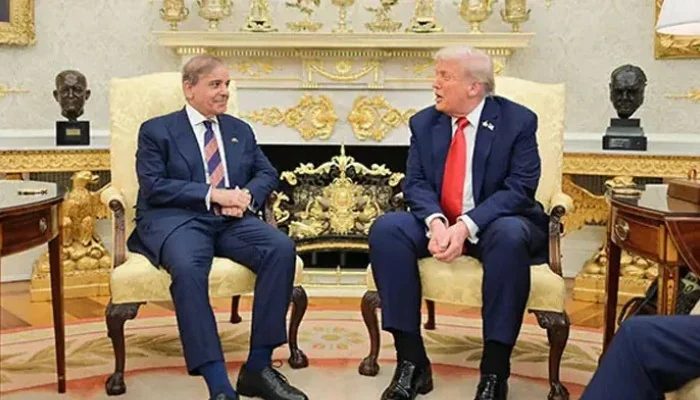
The Democratic Party's success in the US midterm elections should prompt Pakistan to reassess the foundations of its relationship with Washington. US President Donald Trump remains in office until January 2029, and his administration will continue to exercise considerable influence over American foreign policy.
However, the electoral setback for Republicans raises questions about the durability of arrangements negotiated through personal diplomacy. For Pakistan, which has enjoyed an unexpected revival of American attention under Trump, the implications deserve careful consideration.
Pakistan has benefited from unusually direct access to the White House. Acknowledgement of Trump's mediating role in the May 2025 India-Pakistan ceasefire, despite India's rejection of that characterisation, raised Pakistan's diplomatic profile.
Engagement between US and Pakistani civilian and military leaders has intensified. Trade negotiations have produced some tariff concessions, while discussions on critical minerals, energy and investment have created expectations of a broader economic relationship.
Pakistan's role in regional diplomacy, particularly involving Iran, has further enhanced its relevance to Washington. These are meaningful developments.
But diplomatic access, expressions of commercial interest and tangible economic benefits are not synonymous. The critical question is how much of the recent improvement rests on enduring American interests and how much depends on one president's preferences.
Trump's transactional approach has created opportunities for Pakistan. Unlike administrations that have viewed South Asia primarily through the prism of strategic competition with China, Trump has demonstrated a willingness to deal directly with Pakistan on issues where he perceives mutual advantage.
His willingness to challenge India publicly has also altered the diplomatic atmosphere, although it would be premature to conclude that Washington's longstanding strategic interest in India has fundamentally changed. India remains a large market, an important technology partner and a significant element in American efforts to balance Chinese influence.
These interests enjoy support across both American political parties. Pakistan should therefore avoid interpreting temporary diplomatic advantage as a permanent realignment of US priorities in South Asia.
The Democratic resurgence introduces other considerations. Congressional oversight of foreign policy, trade arrangements and investment commitments could become more assertive.
Questions concerning democratic governance, civil liberties and the role of institutions in Pakistan may receive greater attention. Commercial agreements involving politically connected intermediaries could face scrutiny.
None of this necessarily implies hostility towards Pakistan. It does suggest that personal relationships may no longer be sufficient to sustain the momentum of bilateral engagement.
Nor should Pakistan assume that Democrats and Republicans represent entirely different approaches to the region. American concerns about China, nuclear security, terrorism and regional stability have substantial bipartisan foundations.
Differences are more likely to emerge in emphasis, diplomatic methods and the weight assigned to governance and human rights. Pakistan's immediate response should therefore be neither to distance itself from Trump nor to seek favour prematurely with his political opponents.