
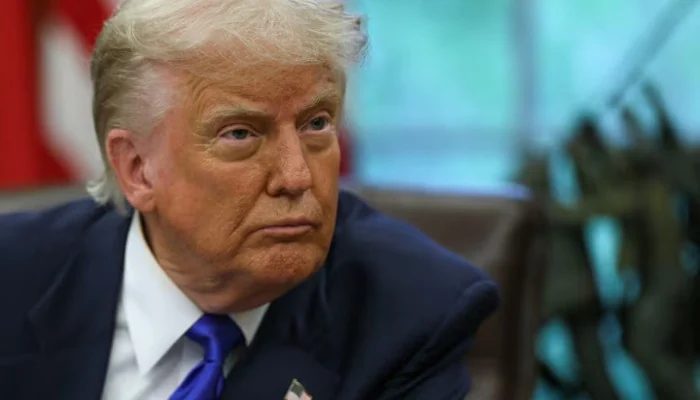
RIYADH/WASHINGTON: President Donald Trump said Washington must decide within two weeks between taking additional steps towards Iran or "ratifying the agreement." "It does not matter what the proposals include; they will not have nuclear weapons," he told reporters at the White House.
He further stated, "They are not doing anything without our approval. Iran will not have a nuclear weapon and will not take any step without our approval." In a meeting with his national security team late Thursday, the US president weighed three options: launching fresh military strikes, continuing economic pressure through sanctions, or reaching a diplomatic agreement requiring significant concessions from Tehran.
Axios reports that during this first high-level discussion since the midterms, Trump indicated a final decision is approaching. He noted that while he prefers not to devastate the country, military action might become necessary to ensure Iran's nuclear programme is permanently destroyed.
On the military front, US Central Command (CENTCOM) is reportedly completing preparations for potential combat operations, though no new authorization has been issued. The possible deployment of a third US carrier strike group signals preparations, though the USS Theodore Roosevelt is not expected until mid-November.
Meanwhile, Qatari Emir Sheikh Tamim bin Hamad Al Thani spoke with Trump to discuss mediation efforts, stressing the importance of avoiding escalation and ensuring energy security. In a related development, Ali Bagheri Kani, deputy head of Iran's top security body, told state television that Iran is not satisfied with "paper commitments" and requires practical US steps.
Iranian media also claimed that the Islamic Revolutionary Guard Corps destroyed a US MQ-1 drone over Qeshm Island. Additionally, Syria has sent military advisers to Saudi Arabia to assist against Houthi attacks, following a defence cooperation pact signed during President Ahmed al-Sharaa's visit to Riyadh.
The international community remains on high alert as diplomatic channels scramble to prevent a wider regional conflict. Analysts suggest that the next 14 days will be critical in determining whether the current standoff leads to a breakthrough or a significant escalation in hostilities.
The White House has maintained that all options remain on the table, emphasizing that the primary goal is to prevent nuclear proliferation in the Middle East. Officials have declined to comment on specific tactical movements but confirmed that monitoring of Iranian activities has intensified.
As the deadline approaches, global markets are reacting to the uncertainty, with oil prices fluctuating in response to the potential for supply chain disruptions in the Persian Gulf. Regional leaders are calling for restraint from both Washington and Tehran to avoid a catastrophic miscalculation.
The situation continues to evolve rapidly, with intelligence agencies providing daily updates to the Oval Office. The world now watches to see if the two-week window will provide the necessary space for a peaceful resolution or if the path toward confrontation is inevitable.