
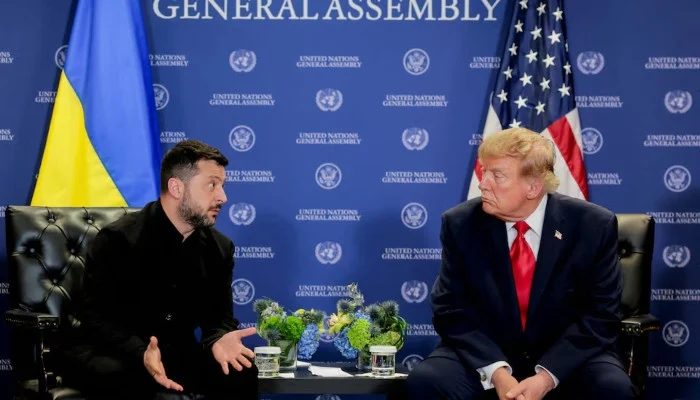
WASHINGTON/KYIV: From US threats to cut off intelligence support for Ukraine to a diesel deal that could help Russia fund its war, it has been a bad week for ties between Kyiv and its most important ally, Washington. Frustrated by high energy costs he blames partly on Ukrainian strikes on Russian refineries, US President Donald Trump has repeatedly criticized Ukrainian President Volodymyr Zelensky.
A disruption of US-provided satellite internet services raised fears that Ukraine could be vulnerable as it prepares for another winter of Russian attacks on its energy infrastructure. Zelensky responded to Trump's barbs with an unusually sharp series of public criticisms of Trump, suggesting the US was now favoring Russia.
He said Ukraine would defy Trump's demand to stop striking Russian energy targets, citing Russia's continued attacks. The widening rift has sparked concerns that Trump and Zelensky's tumultuous relationship could lead to even worse outcomes for Kyiv.
Trump could yet restrict the supply of weapons to Ukraine, follow through on threats to stop sharing battlefield intelligence, or strike more economic deals with Moscow. Despite Zelensky's remarks, Kyiv wants to continue dialogue with Trump's envoys, his friend Steve Witkoff and son-in-law Jared Kushner, two Ukrainian officials familiar with the talks said, speaking on the condition of anonymity.
Denys Sienik, chargé d'affaires at Ukraine's embassy in Washington, told Newsmax on Friday that Ukraine was grateful to Trump and his team for their efforts to end the war and said Ukraine was willing to engage in talks with Russia. Trump told reporters on Friday he would continue to deal with both Zelensky and Russian President Vladimir Putin.
"I want that war to end," he said. Daniel Fried, the senior State Department official on Europe from 2005 to 2009, said it was unclear whether Washington was making a lasting shift away from Ukraine, but the fallout was damaging prospects for an end to the war that began with Russia's 2022 full-scale invasion.
"It's not only a missed opportunity, it causes genuine suffering in Ukraine and encourages Putin to continue the war, so it's not cost-free," said Fried, now at the Washington-based Atlantic Council think tank. Trump's relationship with Zelensky has long been uneasy.
Trump and US Vice President JD Vance publicly upbraided Zelensky during an Oval Office meeting in February 2025. Washington has paused or slowed military assistance to Ukraine under Trump, while allowing European allies to purchase US weapons for Kyiv.
The relationship had steadied until Ukraine's strikes this year on energy sites in Russia began contributing to rising fuel prices. High gasoline and diesel prices are a political headache for Trump ahead of November's midterm elections, in which his Republican Party could lose its majorities in the US Congress, according to analysts.
Experts say that surge in energy costs is mainly the result of the US-Israeli war with Iran, which brought Iranian attacks on energy facilities and has largely shut the vital Strait of Hormuz. Frustrated by Zelensky, however, Trump turned to Russia to increase fuel supply and contain prices, according to a person familiar with the internal debate, who spoke on the condition of anonymity.
Trump said on October 9 he had reached a deal with Putin to temporarily lift sanctions on Russian fuel and import Russian diesel.