
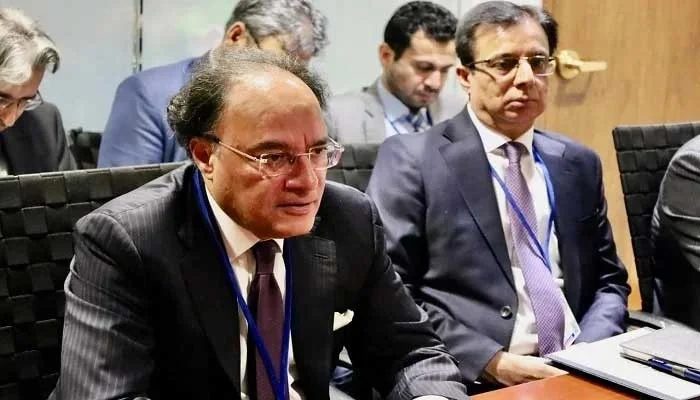
Pakistan needs financial innovation to reduce the cost of doing business and bring more people into the formal economy, Finance Minister Muhammad Aurangzeb said on Monday. He stressed that digital assets must deliver tangible economic benefits before being integrated into the country's financial system.
Speaking virtually at a dialogue on 'Digital Assets and the Future of Banking' at the Lahore University of Management Sciences (LUMS), Aurangzeb said emerging technologies should be assessed on their ability to improve financial services for individuals and businesses. He cited lower remittance costs, faster business payments, more accessible financing for entrepreneurs, and increased productive investment as potential benefits, while emphasizing the need to safeguard financial stability.
"These are the outcomes that should guide this discussion," he said. Aurangzeb noted that Pakistan is moving from macroeconomic stabilization towards sustainable growth, which requires fiscal discipline, stronger exports, and greater private investment.
An inclusive and efficient financial system is also essential to achieving these goals. Referring to international developments, he cited JPMorgan's use of deposit tokens to facilitate transfers for institutional clients through blockchain networks.
He said banks will remain central to the financial system because of their roles in safeguarding money, managing risks, and serving customers. The minister distinguished between tokenized bank deposits, stablecoins, and unbacked crypto assets, stating that Pakistan's regulatory approach must account for these distinctions.
Aurangzeb said the Virtual Assets Act 2026 has established a statutory framework under which the Pakistan Virtual Assets Regulatory Authority (PVARA) is responsible for licensing and supervising virtual asset service providers. The next priority is effective implementation, supported by competent supervision and coordination among relevant institutions, including the State Bank of Pakistan (SBP) and the Securities and Exchange Commission of Pakistan (SECP).
He said the SBP has issued a conditional framework allowing banks to provide services to PVARA-licensed businesses, subject to due diligence. Minister of State and PVARA Chairperson Bilal Bin Saqib said Pakistan needs to participate in shaping global financial standards rather than remain a consumer of technologies developed elsewhere.
Speaking with Pakistan Banks Association Chairperson Zafar Masud, Bilal said blockchain technology could extend beyond cryptocurrency trading to include new ways of transferring value and modernizing Pakistan's financial infrastructure. The government remains committed to fostering an environment where innovation thrives within a secure regulatory perimeter.
By leveraging these advancements, Pakistan aims to enhance its global competitiveness and provide better financial inclusion for its citizens. As the country navigates this transition, the collaboration between regulators, financial institutions, and technology providers will be critical in ensuring that the benefits of digital assets are realized while mitigating potential systemic risks.