
Prime Minister Shehbaz Sharif on Tuesday granted his nod in principle for the Auto Policy 2026-31, proposing to bring down the average tariff to 15 percent and reduce the General Sales Tax (GST) rate for various variants of electric and hybrid vehicles. The government proposed an Auto Development Levy with different rates to collect Rs232 billion over five years.
This amount is to be utilised for the provision of Drawback of Local Taxes and Levies (DLTL) for exporters, for which the government has set a mandatory export target of $6 billion over five years. This includes $2.078 billion from cars, jeeps, SUVs, and double-cabins; $233.4 million from tractors; $409.4 million from motorcycles and rickshaws; and $3.29 billion from parts manufacturers.
The policy envisages mandatory export targets and a framework for domestic value addition. Sources confirmed the policy will now be forwarded to the Prime Minister for formal approval and subsequently to the International Monetary Fund (IMF) for endorsement.
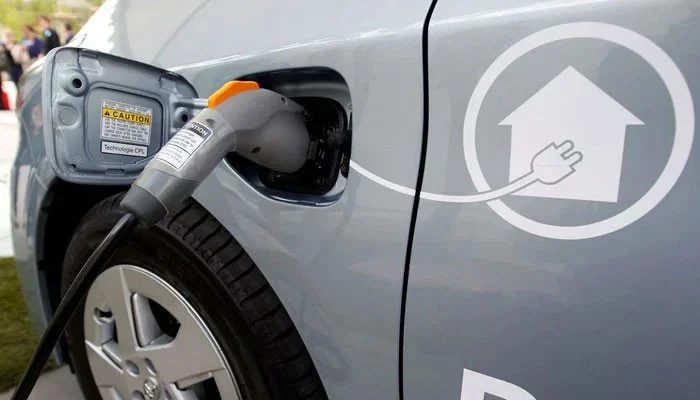
A debate is expected regarding the promotion of New Electric Vehicles (NEVs) over Internal Combustion Engine (ICE) vehicles. Proposed sales tax rates are 1% on Battery Electric Vehicles (BEVs), 6% on Range Extended Electric Vehicles (REEVs), 9% on Plug-in Hybrid Electric Vehicles (PHEVs), and 18% on Hybrid and ICE vehicles.
To combat pollution, the policy proposes reduced tariffs (5%) for the first two years on the import of small EVs (less than $15,000 CIF) and reduced tariffs on EV-specific non-localised parts/Completely Knocked Down (CKD) imports (1%). The State Bank of Pakistan (SBP) is expected to enhance the credit limit for NEV financing from Rs3 million to Rs10 million.
Furthermore, the government plans to phase out SRO regimes and the 5th Schedule of the Customs Act by the end of the policy period. Higher Federal Excise Duty (FED) will be applied to ICE vehicles above 2000cc and NEVs exceeding $75,000 to discourage their use.