
Ghulam Sakina lives in a small straw-and-bamboo cottage on the coast of Sindh. There is no road traffic here, no nearby factory fumes, no crowds.
However, she is among the people hit hardest by climate change. There is no clean drinking water, so she walks miles to get it.
Her husband is a fisherman, but some days the nets come back empty. Hunger is visible on their tired faces.
Far away, in a village in Gilgit-Baltistan, another woman lives beneath tall mountains. A flash flood washes away her home and nearly everything she owns.
Most historical greenhouse gas emissions have come from industrialised countries, while China is now the world's largest annual emitter. Yet the damage crosses borders and falls heavily on people like these two women.
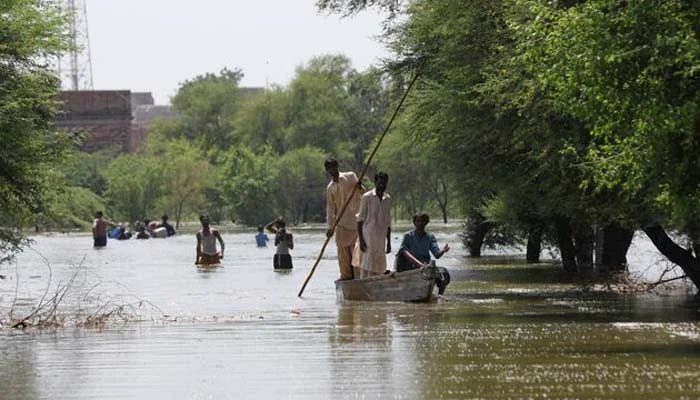
Pakistan produces less than 1% of global emissions, yet it pays a heavy price. The 2022 floods killed more than 1,700 people and affected 33 million.
By early August 2026, at least 136 people had died in monsoon-related incidents, according to the National Disaster Management Authority (NDMA). So, the real test of climate diplomacy is simple: what changes in the lives of people like Sakina?
From November 9 to 20, world leaders will meet for COP31 in Antalya, Turkiye. The COP process has delivered important agreements, most notably the Paris Agreement.
But after more than three decades of climate negotiations, the gap between promises and implementation remains difficult to defend. Take the Loss and Damage Fund.
At COP27 in 2022, countries agreed to it as a historic win for vulnerable nations. Four years later, pledges stand at about $822 million, and campaign groups say only about $449 million has been paid in as of April 2026.
Experts say developing countries may need $200 to $400 billion every year to deal with climate losses. The pledges are a tiny fraction of that, and campaigners warn the fund could run dry by 2027.
The story is similar elsewhere. At COP29, countries agreed to a new climate-finance goal of $300 billion a year for developing countries by 2035, while calling for efforts to scale total climate finance towards $1.3 trillion annually.
At COP30 in Belem, countries agreed to push for a major increase in adaptation finance, but failed to agree on a clear roadmap for moving away from fossil fuels. Each year brings new commitments, while accountability for previous ones remains weak.
Meanwhile, military budgets continue to expand. The Stockholm International Peace Research Institute (SIPRI) says the world spent a record $2.89 trillion on militaries in 2025, the eleventh increase in a row.
That is nearly $8 billion every day. At that rate, the entire $822 million pledged to the Loss and Damage Fund represents less than three hours of global military spending.
Now look at this year. The US-Israel war on Iran began on February 28, 2026.
The US Congressional Budget Office says it cost the Pentagon more than $38 billion by August 1, and it still adds about $3 billion a month. That is roughly forty-six times everything pledged to the Loss and Damage Fund, and it counts only one side's costs.
War also hurts the climate directly. Bombs, burning oil facilities and fighter jets release huge amounts of carbon, further worsening the global crisis while diverting vital funds away from vulnerable communities.