
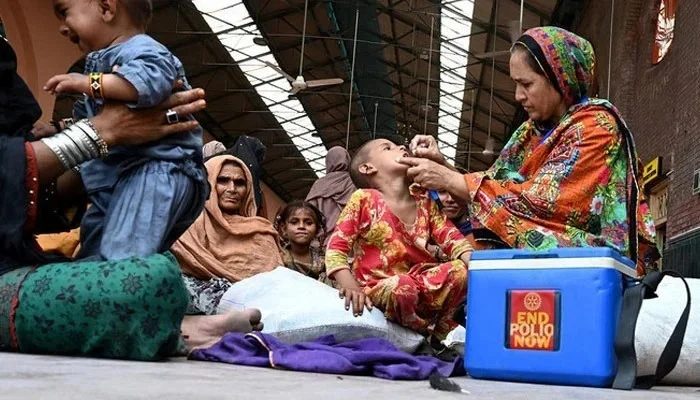
Five years after the parliament passed a law requiring the National Institute of Health (NIH) to manage the country's major infectious disease programmes, those for polio, HIV, tuberculosis, malaria, and hepatitis are still run through separate chains of command, officials say. The NIH (Re-organisation) Act, 2021, requires the NIH's Centre for Disease Control to develop a Diseases Specific Unit to "manage ongoing programmes, including polio, HIV, hepatitis, TB, and malaria." Section 12 also gives the Centre a role in disease surveillance and requires it to maintain a system with federal and provincial governments and other public authorities.
"Unfortunately, no effective transfer of these programmes, or their management, to the NIH has taken place. At the moment, these programmes are not even sharing their data or coordinating with the NIH for disease surveillance and control," an official at the Ministry of National Health Services said.
Federal Health Minister Mustafa Kamal told this correspondent he was not aware the Act provided for bringing the programmes under one command. He said he would seek a briefing from officials and examine the law.
Several members of the newly-appointed NIH Board of Governors were also unaware of the provision and said they would read the Act before responding to questions. But BoG Member Dr. Farhan Essa, an infectious diseases specialist, said he had raised the issue at an earlier meeting and argued that the programmes should be brought under the Centre for Disease Control.
He said separate commands were not how such work was managed elsewhere in the world, and called for a unified structure. He urged the board to appoint interim heads at NIH institutes while it completes the selection of permanent leadership.
At present, the programmes sit under separate administrative structures. The polio eradication effort is run through the National Emergency Operations Centre (NEOC), headed by a joint secretary-level health ministry official who reports to the Prime Minister's Office.
HIV, TB, and malaria are managed through the ministry's Common Management Unit (CMU) which has a national coordinator and separate deputy coordinators for the three programmes. The hepatitis C elimination programme runs separately under a project director appointed by the health ministry.
The government has launched a nationwide screening and treatment programme with an allocation of about Rs68 billion. Dengue and other vector-borne disease responses are largely handled by District Health Offices.
The burden of the diseases involved is heavy. The National Assembly was told in May that an estimated 369,000 people were living with HIV in Pakistan, while about 84,000 were registered and nearly 20,000 people who had started treatment were no longer in follow-up.
The World Health Organization (WHO) estimates that TB affects more than 669,000 people and causes about 51,000 deaths a year. Pakistan reported 1.8 million malaria cases in 2025, a 10 per cent decline from the previous year.
Polio transmission also persists despite extensive campaigns and funding. Pakistan has reported six cases in 2026.
A September campaign vaccinated more than 29.3 million children across 113 districts, but 627,776 remained unvaccinated after follow-up efforts. The Global Polio Eradication Initiative estimates that Pakistan's programme will need about $639.7 million for 2026-29, including a direct government contribution of about $15 million.