
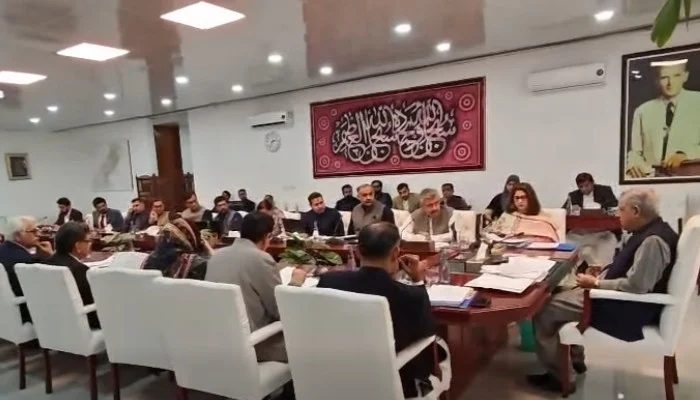
The Cabinet Committee on Disposal of Legislative Cases on Friday approved a series of significant proposals aimed at tightening regulatory oversight, including increased fines for vehicle overloading and critical amendments to petroleum levy laws. The meeting, chaired by Federal Minister for Law and Justice Senator Azam Nazeer Tarar, focused on streamlining administrative and legal frameworks to improve national infrastructure and fiscal compliance.
During the session, the committee granted in-principle approval to the National Highways and Motorway Police (NHMP) Seniority Rules 2026. This move is expected to resolve long-standing administrative concerns within the department, ensuring a more structured career progression for officers tasked with maintaining safety on the country's major road networks.
Minister of State for Finance and Revenue Bilal Azhar Kiani, alongside senior officials from the relevant ministries, participated in the deliberations. The committee conducted a comprehensive review of the current challenges regarding road safety, specifically addressing the persistent issue of overloading, which causes significant damage to national highways.
In a major policy shift, the committee approved enhanced penalties for overloading. Officials noted that the current fine structure has failed to act as a sufficient deterrent, and the new measures are intended to protect public infrastructure from premature deterioration caused by heavy-duty vehicles exceeding weight limits.
Furthermore, the committee cleared draft legal amendments concerning the Petroleum Levy and the Climate Support Levy. These adjustments are part of the government's broader strategy to align fiscal policies with international commitments and domestic economic requirements, ensuring a stable revenue stream for the national exchequer.
The meeting also addressed the ease of doing business in Pakistan. The committee approved the rules for the establishment of the Asaan Karobar Technical Unit and the Pakistan Regulatory Registry.
These initiatives are designed to simplify bureaucratic processes for entrepreneurs and reduce the regulatory burden on the private sector. By digitizing and centralizing regulatory data, the government aims to foster a more transparent and efficient business environment.
The Pakistan Regulatory Registry will serve as a single point of reference for businesses to understand and comply with various legal requirements. The committee emphasized that these reforms are essential for the country's economic stability and infrastructure longevity.
The integration of modern regulatory practices is expected to improve the overall governance framework of the state. The approved proposals and draft amendments will now be submitted to the relevant forums, including the Federal Cabinet, for final ratification and further legal proceedings before they are formally implemented.
As the government moves forward with these legislative changes, stakeholders in the transport and business sectors are expected to adjust their operations to comply with the updated regulations, marking a significant step toward improved national compliance standards.