
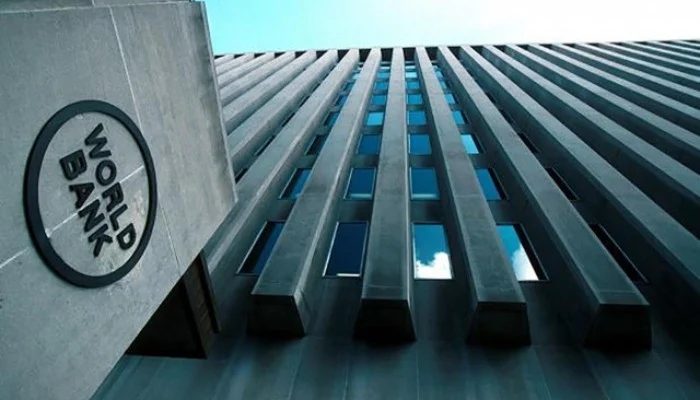
The federal government has granted approval for Khyber Pakhtunkhwa's 'Public Resources for Inclusive Development' programme, funded by the World Bank (WB) with a $200 million loan, to be implemented over a five-year period until 2031. According to the concept paper cleared by the Centre on October 23, the Government of Khyber Pakhtunkhwa submitted a proposal for a $200 million International Development Association (IDA) loan, comprising $180 million in financing and $20 million in technical assistance.
The programme focuses on three primary reform areas: revenue mobilisation, public expenditure efficiency, and data-driven policymaking to foster sustainable economic growth across the province. It aims to strengthen tax policy and administration by broadening the taxpayer base, implementing risk-based audits, and modernising property valuation tables to plug revenue leakages.
The initiative will provide extensive institutional support to key provincial entities including the KP Revenue Authority, Board of Revenue, Excise and Taxation Department, and the Mines and Minerals Department. Furthermore, it seeks to improve public expenditure accountability by strengthening budget allocations in vital sectors such as health and education, digitising payments, and enhancing internal controls.
Additionally, the project will bolster the institutional capacity of the KP Bureau of Statistics to produce high-quality, reliable data for evidence-based policymaking and socio-economic planning. Expected outcomes of this comprehensive framework include increased own-source provincial revenues, more efficient public spending, and credible statistics for future development strategies.
In the short term spanning 12 to 18 months, the programme will operationalise tax audit frameworks, enact crucial legal changes for property valuation, and establish integrated monitoring of human development indicators. The provincial government previously implemented the 'KP Revenue Mobilisation and Public Resource Management Programme' approved in 2017 alongside the 'Spending Effectively for Enhanced Development' programme, both of which remain active until June 2026.