
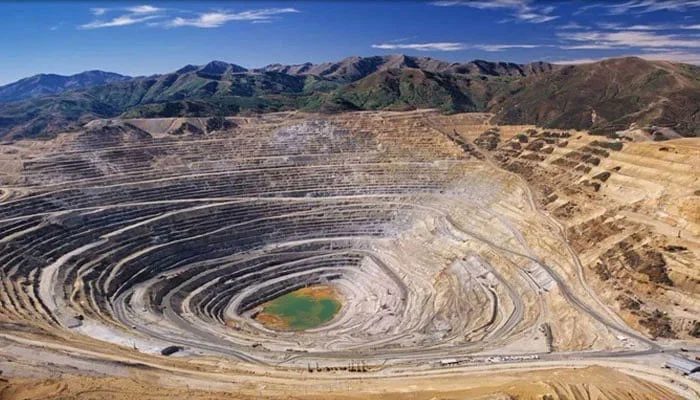
Pakistan is seeking international investment in its mineral sector as rising global demand for copper, lithium, gold and other critical minerals creates new opportunities. The country has an estimated $8 trillion in mineral wealth, with 92 identified minerals and commercial extraction of 52, but the sector contributes only around 3.2 per cent to gross domestic product (GDP).
Growing demand for minerals used in electric vehicles, renewable energy, battery storage and advanced technologies has increased competition for reliable supplies. Pakistan is seeking to attract investors, but turning its mineral potential into economic gains will require regulatory reforms, infrastructure and long-term investment.
The Reko Diq copper-gold project in Balochistan's Chagai district is central to these efforts. Barrick Mining Corporation holds a 50 per cent stake, while the Government of Balochistan owns 25 per cent and three Pakistani state-owned enterprises collectively hold the remaining 25 per cent.
An updated feasibility study completed in February 2025 estimated capital investment of $8.83 billion and a potential mine life of 37 years. First production is expected by the end of 2028.
The project could support exports, government revenues, employment and investment in infrastructure, although actual returns will depend on development costs, operating performance and global commodity prices. Pakistan's mineral prospects received a potential boost in July 2026 when Oil and Gas Development Company Limited (OGDCL) reported finding lithium in formation water from a geothermal well in Sindh.
The company said further technical studies were under way to assess the resource's extent and commercial viability. The discovery has yet to establish whether lithium extraction would be economically feasible.
The government has introduced the National Minerals Harmonisation Framework 2025 to improve coordination between federal and provincial authorities, streamline licensing and bring greater consistency to mining regulations. It is also seeking to improve access to geological data and encourage domestic processing and refining to increase the value earned from mineral resources.
However, attracting international mining companies will require predictable regulations, transparent licensing, reliable infrastructure, security and effective dispute-resolution mechanisms. Environmental safeguards and engagement with communities in mineral-rich areas will also be important for developing the sector sustainably.
The Pakistan Minerals Investment Forum 2026, scheduled for November 12-13 at the Jinnah Convention Centre in Islamabad, is expected to bring together international investors, mining companies and government representatives to discuss exploration, processing and investment opportunities. The inaugural forum in 2025 attracted more than 5,000 delegates from over 50 countries and saw the signing of 16 memorandums of understanding and agreements, according to the figures provided.
The upcoming event offers another opportunity to attract investment, but its impact will depend on whether discussions lead to funded projects and commercial production.