
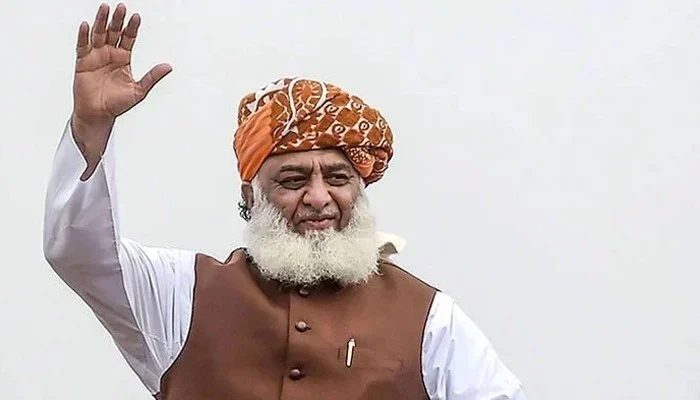
Jamiat Ulema-e-Islam-Fazl (JUI-F) chief Maulana Fazlur Rehman on Saturday called for an in-camera session of parliament to review the country's position in the fight against terrorism, stating that a unanimous national policy was needed and the public should be taken into confidence.
Addressing a press conference at the party's office in Garden Town, Lahore, Fazl said around 250 religious scholars and JUI-F workers had been martyred over the years due to terrorism, adding that the sacrifices of those loyal to the country should not be ridiculed.
"We are not making fun of the sacrifices; we are criticising policies with the intention of bringing about improvements," he said, adding that the party had no desire to initiate a debate that could make the sacrifices of the country's personnel and institutions controversial.
He questioned whether the state had the right to mock the sacrifices made by its own citizens who remained loyal to Pakistan, asserting that responsible state institutions should not ridicule the country or its politicians. Fazl said he had repeatedly called for an in-camera parliamentary session so that the country's position and the reasons behind the lack of desired success against terrorism could be examined.
"Why are we not achieving success in the campaigns and challenges we face? The more medicine we administer, the more the disease grows," he said, calling for a review of the prevailing strategy.
He urged the government to accept his offer and convene the session, asking why the nation was not being taken into confidence. He argued that if people were expected to join the fight against terrorism, form groups, and stand in trenches, they needed to be informed about the situation.
"The only platform to take the nation into confidence is parliament." Fazl emphasized that a unanimous policy and strategy against terrorism should be formulated and the public involved in the campaign through proper consultation. Referring to the political and constitutional situation, he said the imposition of governor's rule and emergency in one province raised questions about the government's approach.
"If terrorism was the reason, did terrorism not exist in Balochistan?" He said the matter was not consistent with democratic principles and questioned the rationale for applying such measures in only one province. Fazl also referred to the decision to join the international alliance against terrorism, saying the country needed a clear and collectively agreed-upon policy.
He noted that the party had faced imprisonment and remained in opposition while protesting at various places, asking whether he himself had not been jailed for six months. He recalled that after the Constitution of 1973 was passed, an emergency was imposed across the country and his father had resigned in protest.
The JUI-F chief said he was a loyal citizen of Pakistan but disagreed with coercive measures despite the sacrifices made by the people. He said criticism of government policies should not be confused with disrespect for the sacrifices of the country's security personnel and institutions.
Regarding Saudi Arabia, Fazl said he condemned any attack on the kingdom. Referring to an attack in Riyadh, he said people performing Umrah while in the state of Ihram had been martyred and condemned the incident.
He stated that Pakistan should stand with Saudi Arabia, describing it as a friendly country.