
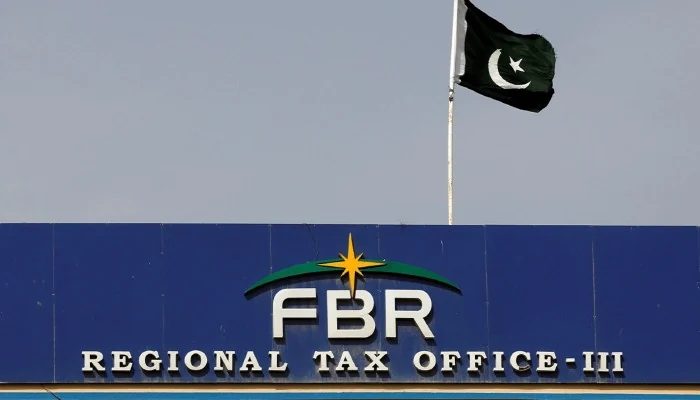
Chairperson of the Federal Board of Revenue (FBR) Rashid Mahmood Langrial has said the government intends to completely abolish the super tax. Its rate has already been reduced by 2 percentage points, and work has begun on its gradual elimination.
He announced that an FBR office will be established at the Korangi Association of Trade and Industry (KATI) to address tax-related issues faced by industrialists in the Korangi Industrial Area. He added that the FBR will consult relevant stakeholders to address shortcomings in the raw material import system.
The scope of the FBR help desk will also be extended beyond Karachi to Sukkur. He was speaking to industrialists during his visit to KATI, according to a statement issued by the association on Wednesday.
The FBR chairman further said meetings will be held to resolve border trade-related issues faced by the leather industry. He also discussed introducing a model similar to that of the Drug Regulatory Authority of Pakistan (DRAP) for the pharmaceutical industry to make the Track and Trace System more effective.
He said the FBR aims to improve the tax system and facilitate the business community. He urged industrialists and the wider business community to cooperate with the FBR in identifying and eliminating tax evasion to make the tax system more transparent and effective.
During the meeting, the FBR chairperson listened to concerns raised by industrialists from various sectors and issued on-the-spot instructions to address them. The initiative was widely appreciated by the business community and KATI, the statement said.
Earlier, KATI President Sheikh Umer Rehan said that if the federal cabinet and ministers also devote time to Karachi, following the FBR chairperson's example, it will help strengthen the country's economy. He observed that coordination and mutual cooperation between the FBR and KATI have improved considerably, which is a positive development.
He added that the effective implementation of the FBR's progressive policies, faceless assessment system, and digitalisation could significantly expand the tax net and increase revenue collection. These measures could also help the government achieve its export target sooner.
The KATI president proposed setting up a joint committee between the FBR and KATI to ensure the prompt resolution of industrialists' tax-related issues and strengthen institutional coordination. He stressed that special measures were also needed to resolve tax issues concerning raw material imports and promote industrial and commercial activity.
Sheikh Umer Rehan further highlighted lengthy delays in tax refunds as one of the major challenges facing industrialists. He said billions of rupees belonging to export-oriented industries and regular taxpayers remain tied up with the FBR for extended periods in the form of pending refunds.
He pointed out that these funds constituted industrialists' working capital and that their prolonged withholding adversely affected business operations. The KATI president urged the FBR to adhere strictly to prescribed timelines for refund payments, strengthen the automated system for disbursing genuine and verified refunds, and ensure that legitimate claims were not withheld on the grounds of unnecessary audits or documentation requirements.
He also called for maximum automation of tax-related procedures to minimise unnecessary interaction between tax officials and business representatives.