
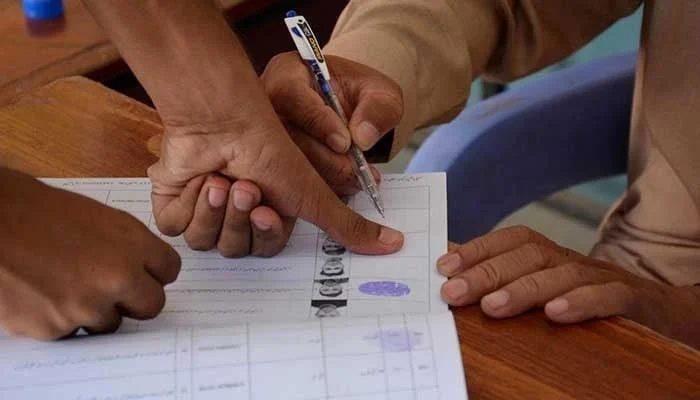
A day after the Election Commission of Pakistan (ECP) announced the local government (LG) polls in Islamabad for December 20, the federal government hinted at a delay in the electoral exercise for the sixth time on Thursday. During the day, the government laid a report of the National Assembly's Standing Committee on Interior on the Islamabad Capital Territory Local Government (Amendment) Bill, 2026 (Ordinance No. II of 2026) in the National Assembly.
Pakistan Muslim League-Nawaz (PML-N) lawmaker Anjum Aqeel Khan stood in for the committee chairman Raja Khurram Shahzad and laid the report in the House. According to the draft of the amendment bill, the Islamabad Capital Territory (ICT) shall consist of three town corporations, each consisting of a mayor and two deputy mayors.
The amendment bill provides that the federal government shall notify three town corporations and carry out delimitation of union councils on the basis of population, which means the polls would not be possible on December 20. Following the tabling of the committee report in the National Assembly, the government is most likely to get the bill passed during the ongoing session, which will continue till October 27.
Last time, the local government polls were to be held on February 15 this year but these were postponed following the promulgation of the ordinance. The ECP ordered its office on Wednesday to fulfil the constitutional and legal requirements for holding the polls.
Following the directive, the election schedule was announced, according to which the nomination papers would be received from November 2 to 6. The Commission has notified 49 officers as district returning officers, returning officers, and assistant returning officers.
Separately, the Election Commission has fixed October 28 for a hearing regarding the conduct of local government elections in Punjab and cantonment boards across the country. Political analysts suggest that the government's move to introduce legislative changes at this stage is a strategic attempt to restructure the administrative setup of the capital before the voters head to the polls.
This has sparked concerns among opposition parties regarding the transparency and timing of the electoral process. The ECP, meanwhile, maintains that it is bound by the Constitution to hold elections within the stipulated timeframe once a schedule is announced.
However, the legislative supremacy of the Parliament often complicates the Commission's ability to enforce its timeline when new laws are introduced. Citizens of Islamabad have expressed frustration over the repeated delays, noting that the absence of a local government has hindered the resolution of basic civic issues.
The upcoming days will be critical as the National Assembly debates the implications of the new bill. As the October 27 deadline for the current session approaches, all eyes remain on the legislative proceedings.
Whether the government proceeds with the bill or allows the ECP schedule to remain intact will determine the political landscape of the capital for the coming months.