
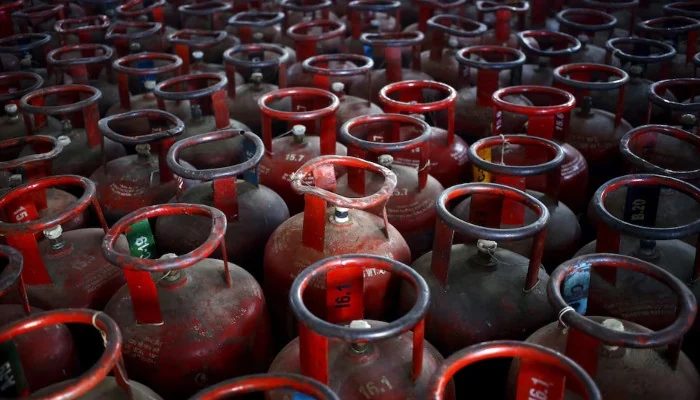
The government has drawn up a plan to invest approximately $1 billion in expanding Pakistan's liquefied petroleum gas (LPG) infrastructure over the next three to five years, including the construction of additional import terminals, storage facilities, cylinders, filling plants, and transportation capacity. "The proposed investment aims to strengthen the country's LPG supply chain and meet the rapidly growing demand for the fuel amid declining domestic natural gas production and increasing reliance on imports," a top official of the Petroleum Division told Probes Pakistan.
Pakistan's existing LPG infrastructure comprises approximately 100,000 metric tonnes (MT) of cumulative storage capacity, including around 14,000 MT at seaports, with the remainder located inland. The country also has a fleet of approximately 2,600 LPG bowsers and nearly 5 million cylinders in circulation.
However, the existing infrastructure is considered inadequate to meet the country's growing energy requirements. "The current import infrastructure consists of two LPG terminals at Port Qasim, each with a storage capacity of approximately 6,500 MT.
These terminals can accommodate vessels of up to 10,000 deadweight tonnes (DWT), significantly below the international standard of 30,000-50,000 DWT. Moreover, Pakistan lacks refrigerated storage facilities and inter-terminal pipeline connectivity, limiting the efficiency of imports," the official noted.
Consequently, seaborne imports account for only around 16 percent of the country's LPG supply, while the remaining imported volumes are transported through land borders. "More than 10 million households in Pakistan are connected to the piped natural gas (PNG) network, while over 25 million households, particularly those in remote areas and localities without pipeline connectivity, rely on alternative fuels, including LPG," he added.
The LPG market, currently estimated at 2.4 million metric tonnes (MMT) annually, has expanded at a compound annual growth rate (CAGR) of 7.5 percent over the past six years. The demand is projected to grow by 8.0-8.5 percent annually in the coming years.
According to an analysis conducted by KPMG, Pakistan's LPG demand is projected to increase from 2.4 MMT in FY2025-26 to 4.16 MMT by FY2032-33. In comparison, domestic production is expected to rise only from 0.96 MMT to 1.35 MMT during the same period.
The resulting supply-demand gap will increasingly be met through imports, which are projected to rise from 1.4 MMT to approximately 2.8 MMT by 2033. The government imposed a moratorium on the natural gas pipeline network expansion in December 2021 due to declining domestic gas production.
Meanwhile, diverting expensive LNG and RLNG to domestic consumers entails substantial subsidies and payment-related challenges. Against this backdrop, LPG has emerged as a viable alternative fuel, particularly for households and regions lacking access to the natural gas network.