
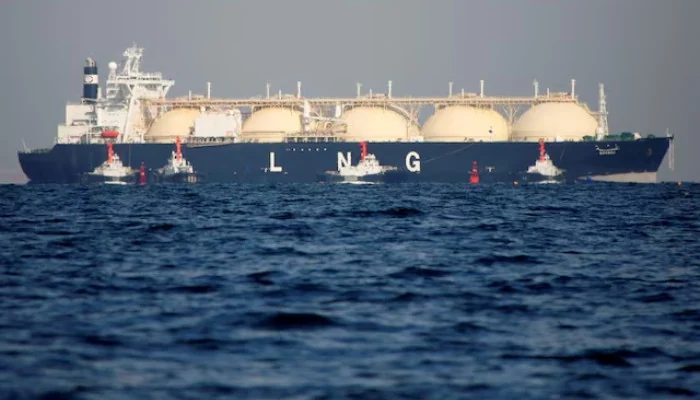
Pakistan has increased re-gasified liquefied natural gas (RLNG) prices by over 15 percent for October after receiving two LNG cargoes from Qatar under long-term contracts, pressuring fuel costs. The Oil and Gas Regulatory Authority (Ogra) said Friday that RLNG prices for consumers of Sui Southern Gas Company (SSGC) went up by $2.17 per million British thermal units (mmBtu), or 15.27pc, to $16.3959 per mmBtu from $14.2233 in September.
For consumers of Sui Northern Gas Pipelines Ltd (SNGPL), prices increased by $2.1296 per mmBtu, or 14pc, to $17.3259 from $15.1963, according to an Ogra notification. The October price calculation was based on two LNG cargoes imported by state-run Pakistan State Oil (PSO) under its long-term contracts with Qatar.
One cargo was priced at 13.37pc of Brent crude oil and the other at 8.7153pc of Brent. Pakistan LNG Ltd (PLL) did not procure any cargo from the international spot market during the month.
It is to be noted that for September, the government had cut prices by up to 21.57pc, easing fuel costs after months of supply disruptions. Qatar remains a key source of LNG for Pakistan under two long-term, Brent-linked contracts with PSO.
Supplies had come under pressure after attacks on Qatari energy infrastructure on March 2 prompted QatarEnergy to declare force majeure and suspend some LNG shipments to customers in Europe and Asia, including Pakistan. The return of two Qatari cargoes in October comes as Pakistan continues to manage gas shortages and higher energy demand.
RLNG accounts for roughly a fifth of the country's energy mix and is widely used to supplement declining domestic gas supplies. Energy experts point out that fluctuating global oil prices and regional geopolitical tensions continue to pose challenges for Pakistan's import-dependent energy sector.
The government maintains that long-term agreements help stabilize supplies, even though prices remain vulnerable to international market shocks and currency devaluation. Consumers across industrial and domestic sectors are expected to feel the financial impact of these revised tariffs in their upcoming utility bills.