
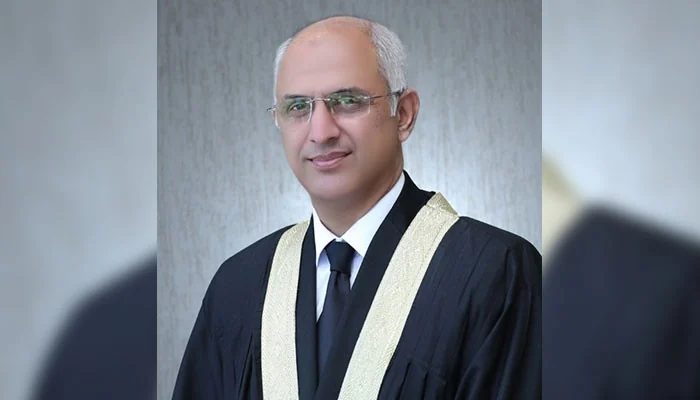
Justice Mohsin Akhtar Kayani has officially resigned from his position as a judge of the Lahore High Court (LHC), marking a significant development in the country's judicial landscape. Sources close to the matter have indicated that the resignation was submitted citing "personal reasons," though the sudden nature of the departure has sparked widespread discussion within legal and political circles.
Justice Kayani was previously a prominent member of the Islamabad High Court (IHC) bench. His transition to the Lahore High Court occurred earlier this year as part of a broader administrative reshuffle aimed at balancing the judicial workload across the provinces.
His tenure at the LHC, while brief, was closely watched by legal observers. The background of this resignation traces back to April, when the Judicial Commission of Pakistan (JCP) undertook a major restructuring of the high courts.
Under the chairmanship of Chief Justice of Pakistan Yahya Afridi, the commission convened on April 28 to deliberate on the transfers of several high-ranking judicial officers. During that session, the commission approved the transfer of three judges from the Islamabad High Court to other provincial high courts.
This decision was based on a proposal initiated by the IHC administration, which sought to streamline judicial operations and address pending cases in various jurisdictions. The JCP, through a majority vote, sanctioned the transfer of Justice Mohsin Akhtar Kayani to the Lahore High Court (LHC).
Simultaneously, Justice Babar Sattar was transferred to the Peshawar High Court (PHC), and Justice Saman Rafat Imtiaz was moved to the Sindh High Court (SHC). The legal community has reacted with surprise to the news of Justice Kayani's resignation.
As a senior jurist, his contributions to the Islamabad High Court were significant, particularly in matters involving constitutional law and civil rights. His departure from the bench leaves a vacancy that will likely be filled through the established constitutional process.
The Judicial Commission of Pakistan is expected to meet in the coming weeks to discuss the implications of this resignation and to initiate the process for appointing a successor. The appointment of judges to the high courts is a rigorous process involving the Chief Justice and senior members of the judiciary.
Political analysts suggest that the resignation of a high court judge often carries weight in the current climate of judicial reforms. The judiciary in Pakistan has been under intense scrutiny, and the movement of judges remains a sensitive topic for both the bar associations and the public.
As of now, the Lahore High Court administration has not issued a formal statement beyond acknowledging the receipt of the resignation letter. The office of the Chief Justice of the Lahore High Court is expected to provide further clarity once the administrative formalities are completed.
This is a developing story, and further details regarding the circumstances of the resignation and the subsequent impact on the court's roster are expected to emerge. Probes Pakistan will continue to monitor the situation and provide updates as more information becomes available.