
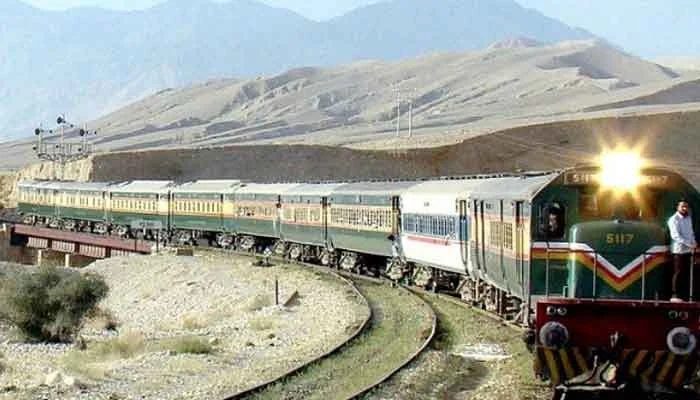
The revival of the Karachi Circular Railway (KCR) has the potential to transform the transport landscape of Pakistan's largest city by providing an affordable, comfortable, and efficient commuting system while generating far-reaching socio-economic benefits. Beyond easing traffic congestion, the project could improve urban mobility, strengthen industrial and commercial activities, reduce transportation costs, and contribute to environmental sustainability.
Karachi has long struggled with an inadequate public transport system, growing traffic congestion, and an ever-increasing number of vehicles on its roads. The restoration of the circular railway, supported by an integrated network of buses, feeder services, and pedestrian facilities, could offer a sustainable solution to these longstanding challenges.
Originally known as Kolachi-jo-Goth, Karachi has evolved into Pakistan's principal commercial, financial, and industrial centre. Following the country's independence in 1947, its population stood at approximately 450,000.
Today, the city is home to more than 20 million people and covers an area of around 3,527 square kilometres. This remarkable population growth has placed enormous pressure on its roads, public services, and urban infrastructure.
Karachi's economic importance makes an efficient transport system essential for the country's overall development. The city is estimated to contribute around 20 to 25 per cent of Pakistan's gross domestic product (GDP) and generate approximately 55 to 65 per cent of federal tax revenue.
Its ports also handle the overwhelming majority of Pakistan's international maritime trade and seaborne cargo. Consequently, improvements in Karachi's transport infrastructure could benefit not only its residents but also the national economy.
Growing challenges: Karachi's transport requirements have expanded alongside its population and economic activity. The city has approximately 6.5 million registered vehicles, including around 4.2 million motorcycles and two million four-wheel vehicles.
The growing dependence on private transport has contributed to congestion, fuel consumption, air pollution, and longer commuting times. Various public and private transport services operate across the metropolis, including People's Bus Service, Green and Orange Line services, Pink Buses, minibuses, taxis, ride-hailing services, auto-rickshaws, and Qingqi rickshaws.
While these services provide mobility to millions, the absence of a fully integrated transport network continues to create difficulties for commuters. The Sindh government has taken several initiatives to improve urban transportation.
The introduction of People's Bus Service, Pink Bus Service, electric buses, and double-decker buses represents an effort to expand public transport options and improve the quality of urban mobility. These initiatives could be further strengthened through a reliable railway system connecting major residential, commercial, industrial, and institutional areas.
People's Bus Service reportedly carries around 125,000 passengers daily, while the combined Green and Orange Line systems facilitate approximately 75,000 daily journeys. Further expansion of public transport is necessary to meet the requirements of Karachi's rapidly growing population.
In this context, the Karachi Circular Railway (KCR) could become a central component of a modern, integrated, and accessible transport system.